
Can Babies Have Honey? The Ultimate Guide for Parents
Babies and Honey? Age Guidelines, Risks, and Safe Sweeteners
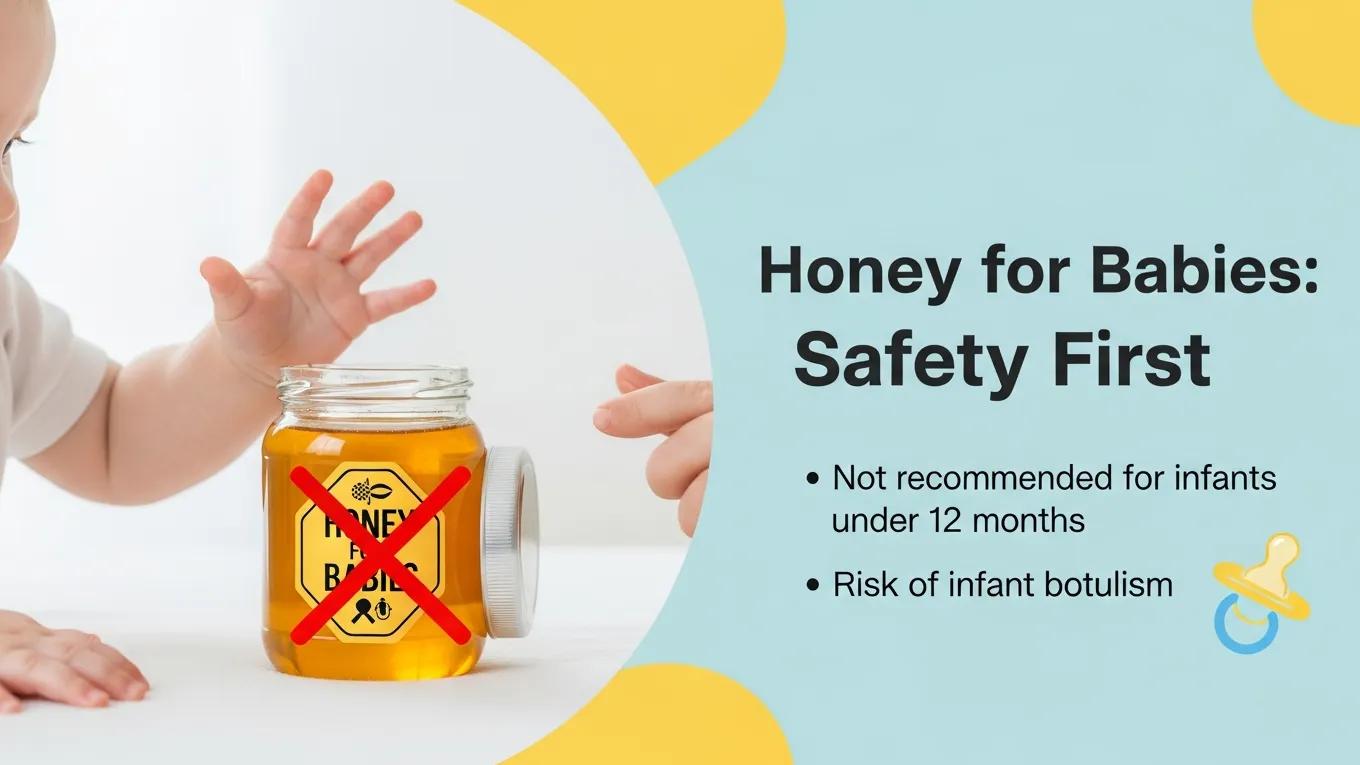
Can babies have honey? No—babies under 12 months should never consume honey due to the risk of infant botulism, a rare but serious illness caused by bacteria that their developing digestive systems cannot safely handle.
Infant Safety Checklist
⚠️ The “Hidden Honey” Checklist for Infants
Botulism spores aren’t just found in the honey bottle — they can also appear in common snacks, baked goods, sauces, and cough products. Avoid these “Hidden Honey” foods until after your baby’s 1st birthday:
- Graham crackers: especially honey-flavored varieties.
- Honey wheat bread: including commercial and bakery-style breads.
- Honey nut cereals: even products using “honey flavoring.”
- Teething biscuits: always check labels for honey used as a binder.
- Restaurant sauces: including honey mustard, BBQ sauce, or honey-glazed vegetables.
- Cough syrups: unless specifically labeled infant-safe and honey-free.
Quick label tip: Look for words like honey, honey powder, honey solids, honey flavor, honey glaze, or honey crystals before giving packaged foods to babies under 12 months.
Table of contents
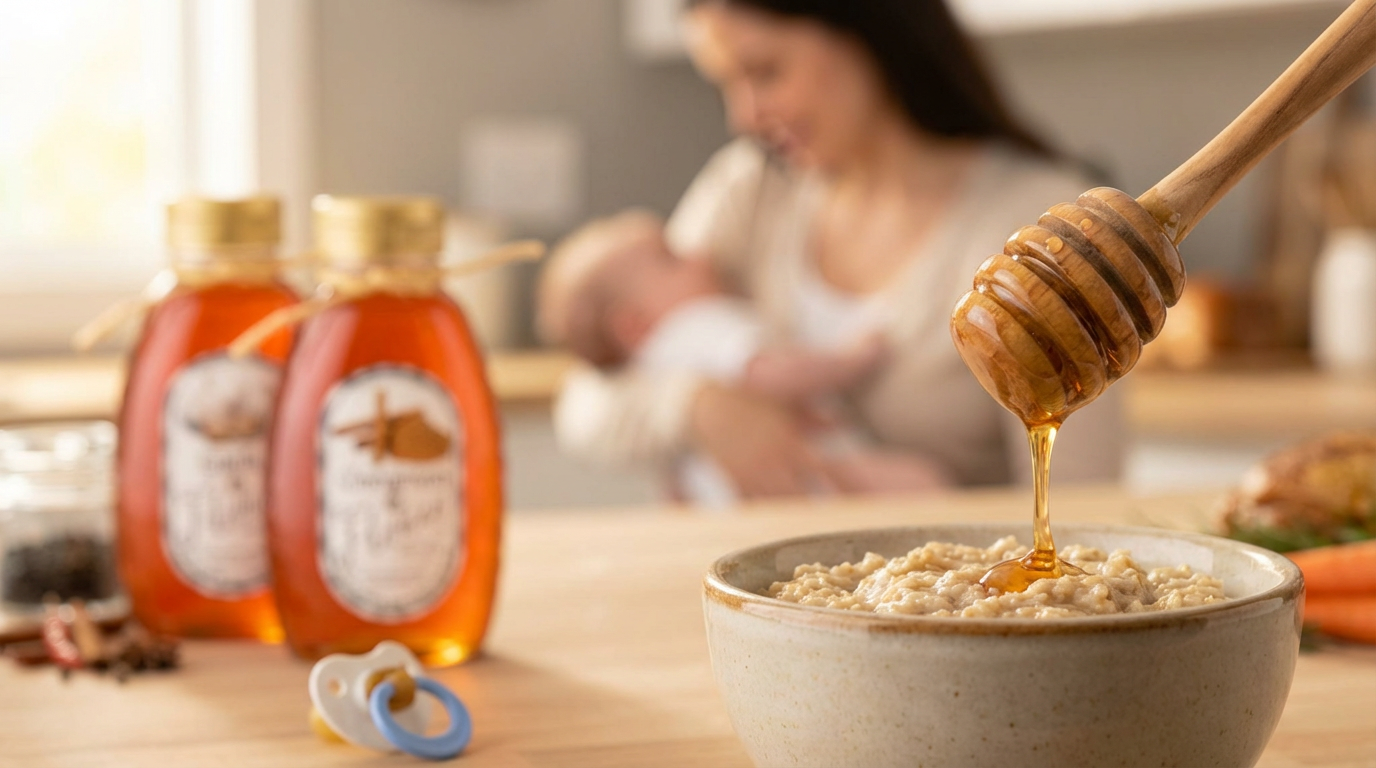
If you keep honey in the pantry, it is natural to wonder when a baby can have a taste, can I give my baby honey in tea or milk, when is honey safe for toddlers, what can I use instead of honey for babies, or what natural sweeteners for babies under 1 are safe, including exploring baby sweetener alternatives. The answer to 'what age is honey safe for babies' and 'when can babies eat honey' is simple, and pediatric experts are very consistent about it: wait until after your child turns 1 to consider safe foods for infants, and honey is not among the safe foods for infants. Pediatric advice strongly emphasizes avoiding honey for babies to prevent health risks, highlighting the importance of honey for infants safety, including infant botulism.
That rule applies to all honey, not just raw honey, reflecting the importance of infant health. It includes pasteurized honey, local honey, store-bought honey, honey mixed into food, and honey used in home remedies. Honey is wonderful for many people, but babies under 12 months need a different standard due to honey risks and potential allergies, including the primary concern of why honey is dangerous for babies under 1: infant botulism, which explains why can’t babies have honey, prompting the question, can toddlers eat raw honey safely.
Pediatrician Response Plan
What to Do If Your Baby Accidentally Ate Honey
Accidental ingestion? Don’t panic, but act. Call your pediatrician immediately, monitor for constipation, weakness, poor feeding, or unusual lethargy for up to 30 days, and save the product packaging in case your doctor asks for details.
- Call your pediatrician and explain how much honey was eaten and when.
- Watch for symptoms such as constipation, weak cry, poor sucking, floppy movements, or extreme tiredness.
- Save the packaging so your doctor can review the honey type, brand, and batch details if needed.
This information is educational and should not replace medical advice. For urgent symptoms, contact your doctor or emergency care right away.
The one-year rule
Major health authorities, including the CDC, the American Academy of Pediatrics, the World Health Organization, and Health Canada, all give the same advice: no honey before 12 months of age. There is no early exception for tiny amounts, premium honey, or cooked honey at home as cooking honey does not make it safe for infants.
A quick age guide makes it easier to remember:
| Baby's age | Honey okay? | What to know |
|---|---|---|
| 0 to 5 months | No | Never add honey to bottles, pacifiers, or water |
| 6 to 11 months | No | Still unsafe, even after solids begin |
| 12 months and older | Yes, in small amounts | Safe from the infant botulism concern, but still an added sugar |
| Toddlers and older children | Yes, sparingly | Best used as an occasional sweetener, not a daily habit |
This is one of those food rules that is clear cut. If a baby has not had a first birthday yet, honey stays off the menu.
Why babies under 1 should not have honey
The concern is infant botulism, a rare but serious illness linked to Clostridium botulinum spores, highlighting the importance of considering raw honey vs pasteurized baby safety and infant digestion safety. Honey can sometimes carry these bacteria spores. Older children and adults usually handle them without a problem because their digestive systems are more mature. Babies under 12 months do not have that same protection yet.
When those bacteria spores grow in a baby's intestines, they can produce a toxin that affects the nerves and muscles, highlighting the importance of safety precautions. That is why infant botulism can cause weakness, trouble feeding, and in severe cases, breathing problems. It is uncommon, but it is serious enough that the guidance is firm.
Public health data backs up that caution. In the United States, confirmed infant botulism cases still appear every year. Most babies recover with medical care, but many need hospital treatment, and some need intensive support. The fact that it is rare does not make the rule optional.
After accidental honey exposure, watch for symptoms over the next several days to a few weeks. Early signs can be easy to miss.
- Constipation: Often one of the first signs parents notice
- Poor feeding: Weak sucking, trouble nursing, or taking less from the bottle
- Weak cry: Softer or less forceful than usual
- Floppiness
- Drooling
- Low energy
- Breathing trouble: This needs urgent medical care right away

Raw, local, organic, and pasteurized all follow the same rule
This is where many parents get tripped up. People often ask if raw honey is the issue, or if commercial honey is safer, and wonder is a little honey okay for babies. For babies under 1, the answer is that all honey is treated the same.
Pasteurization does not make honey safe for infants. Home cooking does not make it safe either. If honey is stirred into warm oatmeal, baked into a snack, added to tea, or used in a homemade cough remedy, it still counts. Health agencies also warn against rubbing honey on a pacifier or mixing it into formula or water.
Local honey has a great reputation in many kitchens, and for good reason, but locality does not change the infant rule. The risk is about spores, not whether the honey came from a farm stand or a supermarket shelf.


Huckle Bee Farms
🍯 Experience Real Raw Honey
Most honey is overheated and stripped of its benefits. Ours stays under 110°F to keep the enzymes, pollens, and antioxidants intact. Taste the difference.
What if a baby accidentally had honey?
First, do not panic. A small accidental taste does not mean a baby will get sick. The risk is real, but illness does not happen every time. What matters is what you do next.
Call your pediatrician and let them know your baby's age, how much honey was eaten, and when it happened. Then keep an eye out for symptoms over the next 3 to 30 days. If your baby starts acting unusually sleepy, has trouble feeding, seems weak, or has breathing changes, get medical care right away.
A simple response plan can help:
- Call your pediatrician for advice
- Save the jar or packaging if you still have it
- Watch feeding and diaper habits: Constipation and poor sucking can be early clues
- Go to urgent care or the ER right away: if your baby seems floppy, has a weak cry, or struggles to breathe
Most of the time, parents are looking for reassurance after a lick from a spoon or a bite of something sweetened with honey. It is still worth checking in with a medical professional. When babies are involved, it is always okay to ask.

Sweet options before age one
The best sweetener for babies under 1 is usually no added sweetener at all. Once solids are introduced, babies can enjoy the natural sweetness already found in whole foods. Mashed fruit, soft cooked vegetables, breast milk, and formula are enough for this stage.
That advice is not just about botulism. Pediatric nutrition guidance also recommends keeping added sugars very low in infancy. Babies are learning flavors during this time. Simple foods let them get used to the taste of oatmeal, yogurt, fruit, vegetables, beans, grains, and other basics without needing everything to be sweet.
If you want to make baby food taste a little sweeter, whole foods do the job nicely:
- Mashed banana
- Unsweetened applesauce
- Pear puree
- Mashed peach
- Sweet potato: Naturally mild and sweet when cooked until soft
- Oatmeal with fruit puree: A baby-friendly way to add flavor without added sugar
Maple syrup, coconut sugar, agave, stevia, and table sugar are not good swaps for babies, following strict honey age guidelines baby. Even when a sweetener sounds natural, it is still an added sweetener. Before age 1, there is really no need for any of them.
What experts agree on
This is one of those rare nutrition topics with almost no debate among major health agencies. In the United States, Canada, the United Kingdom, Europe, Singapore, and elsewhere, the advice is the same: no honey before 12 months.
That consistency matters. Parents hear all kinds of family traditions and internet tips, especially around coughs, teething, and homemade baby foods. Honey sometimes shows up in old remedies, but current medical advice is very clear. Waiting until after the first birthday is the safer choice.

After the first birthday, honey can join the table
Once a child is 12 months old, honey is generally considered safe from the infant botulism concern. That means a little honey in yogurt, oatmeal, or toast is usually fine. Many families choose to introduce it slowly, just like any new food.
Even then, it helps to keep portions modest. Honey is still an added sugar. It may be a lovely pantry ingredient, but toddlers do not need much of it. A drizzle goes a long way.
This is also a good time to remember that "safe" and "needed" are not the same thing. A child over 1 can have honey, but meals do not need to be sweet to be appealing. Fruit, cinnamon, warm oats, baked apples, and roasted carrots bring plenty of flavor on their own.
Common questions parents ask
Many parents wonder if honey in packaged foods counts. If you are feeding a baby under 12 months, the safest approach is to avoid any food that contains honey unless a pediatrician tells you otherwise. Read labels carefully on cereals, crackers, teething snacks, pouches, and baked goods.
Another common question is whether honey is okay for a baby's cough. Honey is often recommended for cough relief in children over 1 year old, but not for infants. If a baby younger than 12 months has a cough, it is best to talk with a pediatrician about safer options.
Some also ask whether a baby can have foods made with baked honey. Home baking does not remove the concern for infants. If the ingredient list includes honey, it is still a no before the first birthday.
A simple way to remember it
Think of honey as a "first birthday food." Before then, skip it completely. After then, use it lightly.
That one rule covers raw honey, filtered honey, local honey, whipped honey, infused honey, and honey in recipes. It also leaves room for plenty of naturally sweet baby foods during the first year, when soft fruits and vegetables do the work beautifully.
If you are ever unsure, your pediatrician is the right person to ask. And if you only keep one takeaway from all of this, make it this: babies under 12 months should not have honey, even in small amounts or mixed into food.
Frequently Asked Questions
What are the symptoms of infant botulism?
Infant botulism can manifest through various symptoms, often starting with constipation, poor feeding, and a weak cry. Other signs include floppiness, drooling, low energy, and in severe cases, breathing difficulties. These symptoms can appear anywhere from a few days to several weeks after exposure to honey. If you notice any unusual behavior in your baby, especially after they may have ingested honey, it is crucial to seek medical attention promptly to ensure their safety and well-being.
Can honey be used in homemade baby food?
Using honey in homemade baby food is not recommended for infants under 12 months. Regardless of whether honey is raw, pasteurized, or baked into recipes, it poses the same risk of infant botulism. Instead, focus on naturally sweet ingredients like mashed fruits or vegetables to enhance the flavor of baby food. This approach not only avoids the risks associated with honey but also helps introduce your baby to a variety of healthy flavors without added sugars.
Are there any safe sweeteners for babies under one year?
For babies under one year, the best approach is to avoid added sweeteners altogether. Instead, opt for the natural sweetness found in whole foods like mashed bananas, applesauce, or sweet potatoes. These options provide flavor without the risks associated with added sugars. Pediatric nutrition guidelines emphasize keeping added sugars low during infancy, allowing babies to develop a taste for wholesome foods without the need for sweeteners.
What should I do if my baby accidentally consumes honey?
If your baby accidentally consumes honey, remain calm and take immediate action. Contact your pediatrician to inform them of your baby's age, the amount of honey ingested, and the time of consumption. Monitor your baby for symptoms of infant botulism over the next few weeks. If you notice any concerning signs, such as weakness or difficulty feeding, seek medical attention right away. Keeping the honey packaging can also be helpful for your doctor.
Is it safe to give honey in tea or milk to toddlers?
Once a child turns 12 months old, honey can be safely introduced in small amounts, including in tea or milk. However, it is essential to use honey sparingly, as it is still considered an added sugar. While honey can enhance the flavor of beverages, it should not become a daily habit. Instead, focus on providing a balanced diet with a variety of flavors from whole foods, allowing your toddler to enjoy honey occasionally as a treat.
What are the risks of giving honey to babies before one year?
The primary risk of giving honey to babies under one year is infant botulism, a rare but serious illness caused by the bacteria Clostridium botulinum. Babies' immature digestive systems cannot handle the spores that may be present in honey, leading to potential toxin production. Symptoms can range from constipation to severe respiratory issues. Due to these risks, health authorities strongly advise against introducing honey to infants until they reach their first birthday.
How can I ensure my baby is safe from honey exposure?
To keep your baby safe from honey exposure, avoid adding honey to any foods or drinks, including pacifiers or bottles. Always read labels on packaged foods to ensure they do not contain honey, especially for snacks and baby foods. Educate caregivers and family members about the risks associated with honey for infants. If you have any doubts or questions, consult your pediatrician for guidance on safe feeding practices for your baby.
Conclusion
Understanding the risks associated with honey consumption for infants is crucial for ensuring their safety and health. By adhering to the guideline of avoiding honey until after the first birthday, parents can protect their babies from potential dangers like infant botulism. Explore safe sweetener alternatives and focus on introducing natural flavors through whole foods during this critical developmental stage. For more insights on infant nutrition and safe feeding practices, visit our resource center today.

Author - Jim Douglas - Founder Huckle Bee Farms
For Jim Douglas, beekeeping is more than a craft—it’s a commitment to purity and the environment. After an honorable career in the U.S. Army and a tenure as a COO for the Boy Scouts of America, Jim sought a way to combine his leadership experience with his love for the outdoors.
In 2012, he founded Huckle Bee Farms with a simple mission: to take honey back to its raw, unadulterated roots. Jim’s expertise lies in the delicate balance of infusing raw honey with organic ingredients without compromising its natural medicinal properties. His "small-batch" philosophy ensures that every jar meets the highest standards of quality and transparency. Today, Jim continues to lead Huckle Bee Farms with the same integrity he practiced in uniform, ensuring that every drop of honey supports both the health of the consumer and the survival of the honeybee.
His mission is simple: to make life a little sweeter—naturally.
Learn More


Key Takeaways on Honey Safety for Infants
This list summarizes the essential points regarding the safety of honey consumption for babies, emphasizing the importance of adhering to age guidelines and understanding the associated risks.
- No Honey Before 12 Months: Major health organizations, including the CDC and AAP, recommend avoiding honey entirely for infants under one year to prevent the risk of infant botulism.
- Infant Botulism Risk: Honey can contain Clostridium botulinum spores, which can lead to serious health issues in babies due to their immature digestive systems.
- Symptoms to Watch For: If a baby accidentally consumes honey, monitor for signs like constipation, poor feeding, and weakness, which may indicate botulism.
- All Types of Honey Are Unsafe: Whether raw, local, or pasteurized, all honey poses the same risk for infants under 12 months, and cooking does not eliminate this danger.
- Safe Sweetener Alternatives: Instead of honey, opt for naturally sweet whole foods like mashed bananas, applesauce, and sweet potatoes to introduce flavors without added sugars.
- Consult Your Pediatrician: If honey exposure occurs, contact your pediatrician for guidance and keep an eye on your baby's health for several weeks.
- Post-12 Months Introduction: After the first birthday, honey can be introduced in small amounts, but it should still be used sparingly as it is an added sugar.