


Is Honey Vegan? What Vegans Should Know About Bees, Ethics, and Labeling
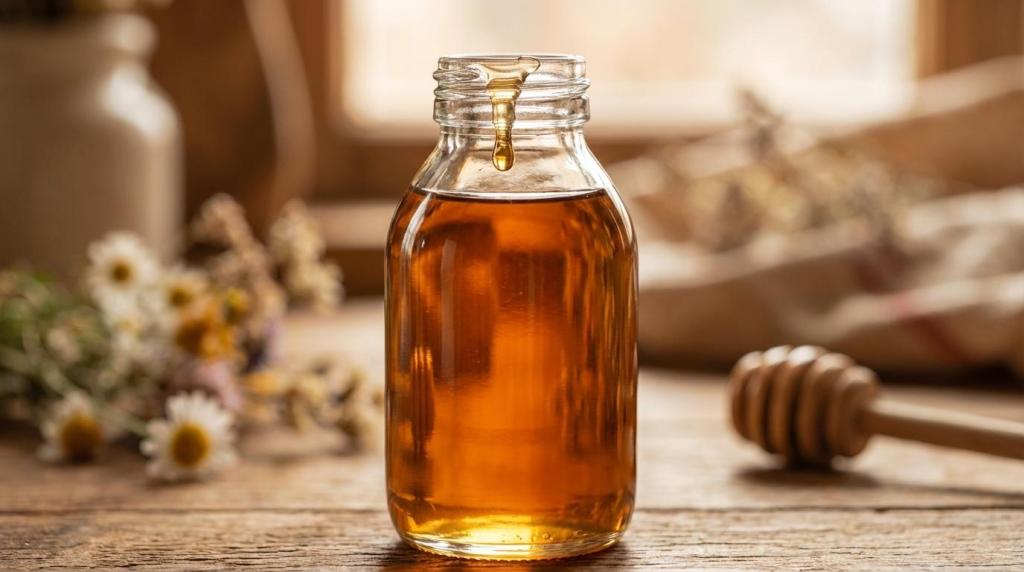
The short answer is simple: most vegans do not consider honey vegan.
That answer can feel surprising at first. Honey comes from insects, not mammals. Bees are wild-minded pollinators, not barnyard animals. Honey is also often sold as natural, local, and tied to healthy landscapes. So it is easy to see why people ask whether honey might be an exception.
For most vegans, though, the issue is not only whether a food seems wholesome. It is whether that food comes from an animal and whether people are taking something the animal made for its own use, such as honey replacement vegan.
The shortest answer
If someone follows a strict vegan standard, honey is usually off the table.
Major vegan groups, including The Vegan Society and PETA, treat honey as non-vegan. Their view is that bees make honey for bees, not for people, and that harvesting it involves animal use even when the practice looks gentle from the outside.
Why most vegans say no
Veganism is often described as avoiding animal-derived products as far as possible and practical. Under that view, honey is not just another sweetener. It is a food produced by bees, stored by bees, and used by bees to feed the colony.
That leads to the core ethical objection. Many vegans are not only trying to avoid obvious cruelty. They are also trying to avoid exploitation. If bees gather nectar, process it, and store it for the hive, then taking that honey is seen as taking the result of animal labor. Furthermore, they often seek honey alternatives such as vegan honey alternatives.
After that basic point, concerns about beekeeping methods come into play.
- Animal origin: Honey is made by bees and intended as food for the colony.
- Exploitation concern: Many vegans object to using animals for human benefit, even when physical harm is minimized.
- Commercial practices: Large-scale beekeeping can involve smoking hives, queen replacement, transport stress, and sugar syrup feeding after harvest.
That last point matters because not all honey reaches the market the same way. A small local beekeeper and a large commercial operation may have very different practices, yet the vegan objection often applies to both beekeepers. For a strict vegan, the central question is still the same: Was this made by animals for their own survival? What is vegan honey
Why do some people still debate it
Not everyone who eats mostly plant-based food follows the same ethics. Some people avoid meat and dairy but still eat local honey. Some call themselves “bee-gans.” Others feel that careful small-scale beekeeping can support pollination, serve as a honey alternative for sweetening, and do less harm than industrial agriculture in other forms, providing sweet substitutes for traditional honey.
That is where the conversation gets more layered.
Supporters of honey-friendly plant-based diets often say a responsible beekeeper can leave enough honey for the hive, avoid rough handling, and care for colonies through the seasons. They may also point to the value of pollinators in gardens, orchards, and farms.
Strict vegans usually answer that this still does not make honey vegan. In their view, “careful harvesting” does not change the basic fact that honey is an animal product. A product can be local, small-batch, and thoughtfully made, while still falling outside vegan ethics.
Both sides are often talking about different questions. One side asks, “Can honey be produced with care?” The other asks, “Is any use of bee-made food compatible with veganism?”
Bees, beekeeping, and the welfare question
Bees make honey as an energy reserve. It helps feed the colony, especially when forage is scarce. Critics of honey harvesting argue that replacing honey with vegan honey alternatives is not a true substitute. Even when it keeps a colony alive, it may not offer the same nutritional value as the bees’ own stored food.
There are also concerns about common beekeeping interventions. Depending on the operation, these may include splitting colonies, replacing queens, moving hives long distances for pollination contracts, or selecting for productivity in ways that change hive behavior. Vegan critics point to these steps as evidence that honey production is not simply “collecting extra sweetness from nature.”
A lot depends on scale, season, climate, and beekeeper choices. That is one reason the public conversation can feel messy.
The environmental angle is not as simple as it sounds
People often assume that buying honey automatically helps bees, but the impact of bee byproducts can make the picture more mixed.
Managed honey bees are important pollinators in agriculture. At the same time, some researchers and environmental advocates note that dense populations of managed honey bees can compete with native pollinators for nectar and pollen. In certain places, the bigger ecological need may be habitat restoration for wild bees, butterflies, moths, beetles, and other pollinating species. Additionally, there is an increasing interest in honey alternatives for those who prefer ethical consumption, such as the growing market for vegan honey alternatives.
So a shopper can support bees and still choose not to eat honey. Planting native flowers, reducing pesticide use, and supporting farms with pollinator habitat can all help. Buying honey is one kind of relationship with pollinators, but it is not the only honey replacement for vegans.
What labels do and do not tell you
This is where many shoppers get tripped up.
If a product is truly certified vegan, it should not contain honey, beeswax, royal jelly, or other bee-derived ingredients. Vegan certification groups treat honey as non-vegan.
But many packages do not use a third-party vegan certification. They may say “plant-based,” “vegetarian,” “natural,” or “cruelty-free,” and those words are not interchangeable.
Here is a quick guide:
| Label or claim | Honey allowed? | What it usually means |
|---|---|---|
| Certified vegan | No | No animal-derived ingredients, including honey |
| Vegan Society style trademark | No | Honey is excluded |
| Vegetarian | Often yes | May still include honey |
| Plant-based | Maybe | Not always legally defined, so check ingredients |
| Cruelty-free | Maybe | Usually refers to testing, not ingredients |
| Raw | Yes | Says nothing about vegan status |
| Local | Yes | Tells you origin, not ethics or ingredients |
This matters because a product can sound plant-forward while still containing honey. Granola, snack bars, cereals, sauces, tea blends, lozenges, and skincare products are common places where it shows up.
There have even been cases where brands were challenged for calling products vegan while using honey. That kind of dispute has made shoppers more careful, and rightly so.
A parallel from MinegenVerden underlines the labeling nuance by explaining how CE-marking and Oeko-Tex indicate product safety or textile standards, not ethical positions like honey vegan alternative.
A practical way to read a package
If you are vegan or shopping for someone who is, the safest move is to look for a trusted vegan certification and then read the ingredient list anyway.
A few terms should put you on alert. Honey is obvious, but bee pollen, beeswax, propolis, and royal jelly are also not vegan. “Natural sweetener” is not clear enough on its own. Neither is “made with real ingredients.”
After a short paragraph like that, a simple habit list can help:
- Check the certification mark
- Read the full ingredient panel
- Watch for bee-derived ingredients
- Treat “plant-based” as a clue, not proof
- Ask the brand if the label is vague
That last step is worth more than people think. Good brands should be able to answer clearly.
If you avoid honey, what can you use instead?
In the kitchen, there is no shortage of swaps.
Some alternatives taste bright and floral. Others lean earthy, caramel-like, or neutral. The best one depends on what you are making and whether you want honey’s texture, sweetness level, or flavor.
- Maple syrup
- Agave nectar
- Date syrup
- Brown rice syrup
- Sorghum syrup
- Apple-based vegan honey
There are also several popular vegan honey brands that offer excellent plant-based alternatives. Bee Free Honee is made from organic apples and mimics the taste and texture of real honey without any bee involvement; it is widely available online and in health food stores. Humble Honee is a coconut-based vegan honey substitute that offers a rich, floral sweetness and works well as a 1:1 honey replacement in recipes and beverages. Another option is The Single Origin Food Co. Vegan Honey, made from dates and apple juice, providing a natural caramel-like sweetness and favored by many ethical vegans.
For tea, oatmeal, toast, or dressings, these usually do the job well. In baking, moisture and sweetness matter more than matching honey exactly, so several options work. In sauces or glazes, a thicker syrup can be closer in texture.
For people who avoid honey for ethical reasons, the good news is straightforward: you do not need honey to cook well, bake well, or sweeten well.
What honest honey marketing looks like
There is also an important point for honey producers.
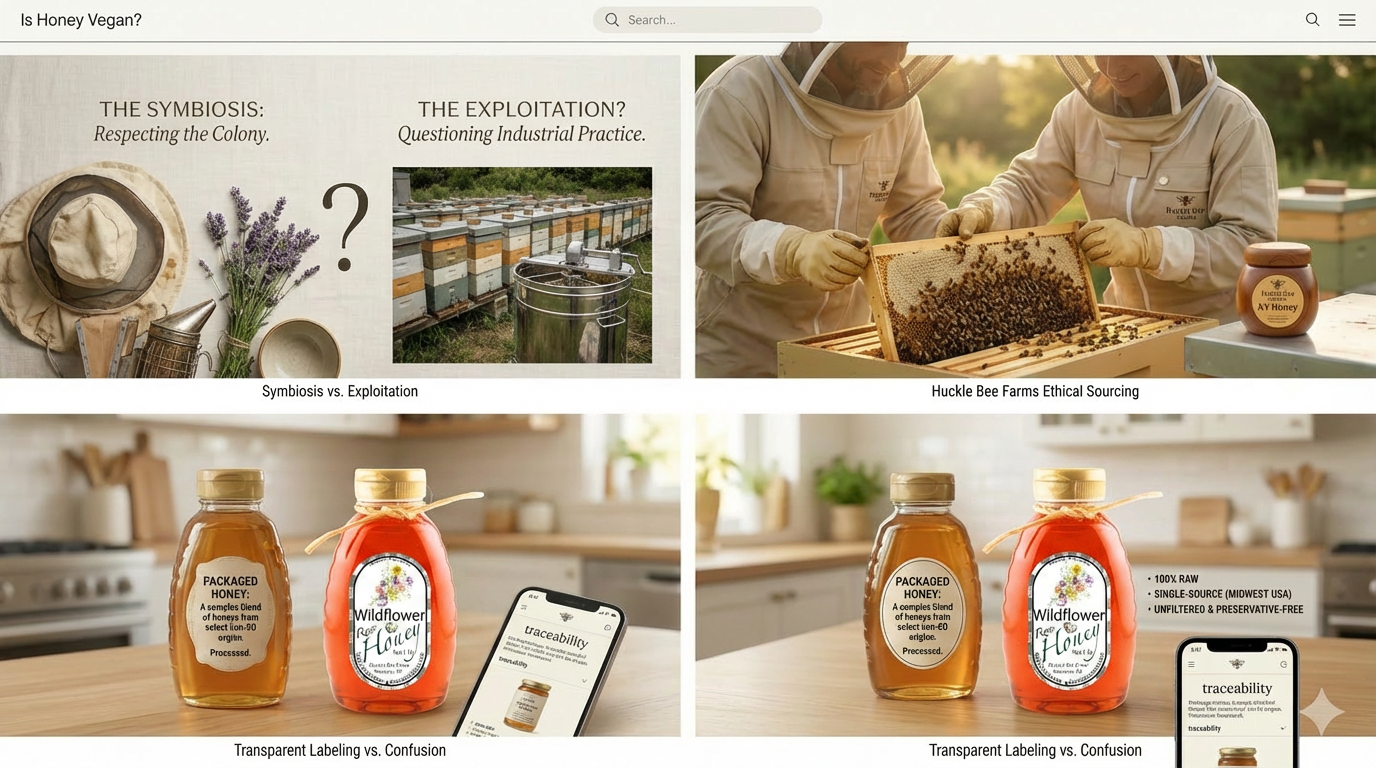
If a business sells honey, the cleanest approach is honesty. Honey should be described as honey, not as vegan or vegan-friendly. That sounds obvious, but clear language builds trust with both honey lovers and vegan shoppers.
At Huckle Bee Farms, that means talking about honey as a handcrafted, bee-made food. The focus is on raw and infused honeys, on-demand bottling for freshness, and transparent beekeeping practices. It is not presented as vegan honey alternatives , because that would be misleading.
That kind of clarity matters. A person can appreciate careful beekeeping by beekeepers, raw honey, and small-batch production while also admitting that honey does not fit a vegan standard. Those ideas are not in conflict. They just belong to different value systems.
So, is honey vegan?
For most vegans, no.
For some plant-based eaters, local-food shoppers, or people who make room for honey in an otherwise animal-free diet, the answer may be more personal. Still, if you are using the standard definition recognized by major vegan organizations, honey is not a honey replacement for vegans.
Which means the most helpful answer is also the plainest one: if a product contains honey, it should not be labeled vegan. If you want a vegan sweetener, choose a plant-based alternative. If you want honey, buy it with open eyes, good questions, and a clear sense of what the label does and does not mean.
Frequently Asked Questions
1. What are some common misconceptions about honey and veganism?
Many people mistakenly believe that honey is a natural product that can be consumed by vegans without ethical concerns. This misconception often arises from the perception that honey is simply a sweetener produced by bees in the wild. However, the core issue for vegans is that honey is an animal product, created for the bees' own sustenance, and its harvesting can involve exploitation, regardless of the methods used. Understanding this distinction is crucial for those adhering to strict vegan principles.
2. Are there any health benefits to consuming honey compared to vegan alternatives?
Honey is often praised for its potential health benefits, including its antioxidant properties and natural antibacterial effects. However, many vegan alternatives, such as maple syrup and agave nectar, also offer health benefits, including vitamins and minerals. The choice between honey and plant-based sweeteners often comes down to personal preference and dietary ethics rather than health superiority. It's essential to consider the nutritional profile of each option and choose what aligns best with your health goals and ethical beliefs.
3. How can I identify vegan-friendly sweeteners in stores?
To identify vegan-friendly sweeteners, look for products that are clearly labeled as"certified vegan." Always check the ingredient list for any bee-derived products like honey, beeswax, or royal jelly. Additionally, terms like"plant-based" or"natural" do not guarantee that a product is free from animal ingredients, so it's crucial to read labels carefully. If in doubt, consider reaching out to the manufacturer for clarification on their ingredients and sourcing practices. For instance, you might want to explore vegan honey alternatives.
4. What are the environmental impacts of honey production?
The environmental impact of honey production can be complex. While managed honey bees play a vital role in pollination, their presence can sometimes compete with native pollinators, potentially disrupting local ecosystems. Additionally, large-scale beekeeping practices may lead to habitat degradation and stress on bee populations. Therefore, while honey can support agricultural practices, it is essential to consider the broader ecological implications and support sustainable practices that prioritize biodiversity and habitat restoration, including vegan honey alternatives.
5. Can I still support bees without consuming honey?
Absolutely! There are many ways to support bee populations without consuming honey. Planting native flowers, reducing pesticide use, and creating pollinator-friendly habitats are effective methods to help sustain bee populations. Additionally, supporting local farms that practice sustainable agriculture can contribute to a healthier ecosystem for bees and other pollinators. Engaging in community efforts to protect natural habitats can also make a significant difference in promoting bee welfare. Furthermore, considering vegan honey alternatives can also be part of that support.
6. What are some popular vegan substitutes for honey in recipes?
There are numerous vegan substitutes for honey that can be used in various recipes. Popular options include maple syrup, agave nectar, date syrup, and brown rice syrup. Each of these alternatives offers unique flavors and sweetness levels, making them suitable for different culinary applications. For instance, maple syrup provides a rich, earthy flavor, while agave nectar is milder and works well in beverages. Experimenting with these honey replacement vegan can help you find the perfect match for your dishes.
7. How do ethical considerations influence the debate on honey consumption?
Ethical considerations play a significant role in the debate over honey consumption. Many vegans argue that consuming honey exploits bees, as it involves taking a resource that bees produce for their survival. This perspective emphasizes the importance of animal rights and the avoidance of exploitation. Conversely, some individuals believe that responsible beekeeping can coexist with ethical practices, arguing that it supports pollination and biodiversity. Ultimately, the debate reflects differing values regarding animal welfare, environmental sustainability, and food ethics.
Conclusion
For those adhering to strict vegan principles, honey is generally considered non-vegan due to its animal origin and the ethical implications of its harvesting. Understanding the nuances of labeling and the environmental impact of honey production reinforces the importance of making informed choices. If you're seeking alternatives, explore a variety of plant-based sweeteners that align with your dietary values. Discover more about sustainable living and ethical eating by browsing our resources today.
Author - Jim Douglas - Founder Huckle Bee Farms
For Jim Douglas, beekeeping is a calling—one that ties environmental stewardship to pure, honest honey. After a career in the U.S. Army and leadership roles with the Boy Scouts of America, Jim founded Huckle Bee Farms in 2012 to return honey to its raw, unadulterated roots.
Jim’s small-batch philosophy emphasizes transparency and careful infusion of organic ingredients without compromising honey’s natural properties. He leads Huckle Bee Farms with the same integrity and commitment that guided his earlier work, aiming to make life a little sweeter—naturally.
Key Takeaways on Honey and Veganism
This list summarizes the essential points regarding the relationship between honey and veganism, highlighting the ethical considerations, labeling nuances, and alternative sweeteners for those adhering to a vegan lifestyle.
- Honey is not considered vegan: Most vegans avoid honey because it is an animal product created for bees' sustenance, not for human consumption.
- Ethical concerns: The harvesting of honey raises issues of exploitation, as it involves taking a resource that bees produce for their survival.
- Vegan certification: Products labeled as "certified vegan" should not contain honey or any bee-derived ingredients, ensuring compliance with vegan standards.
- Labeling confusion: Terms like "plant-based" or "natural" do not guarantee a product is free from honey; always check the ingredient list for clarity.
- Alternative sweeteners: Popular vegan substitutes for honey include maple syrup, agave nectar, and date syrup, which can be used in various recipes.
- Support for bees: You can help bee populations without consuming honey by planting native flowers and reducing pesticide use, promoting a healthier ecosystem.
- Honest marketing: Honey producers should clearly label their products as honey, avoiding misleading claims of being vegan-friendly to build trust with consumers.


