


Pollinator Habitat Loss: What’s Causing It, Why It Matters, and How to Help
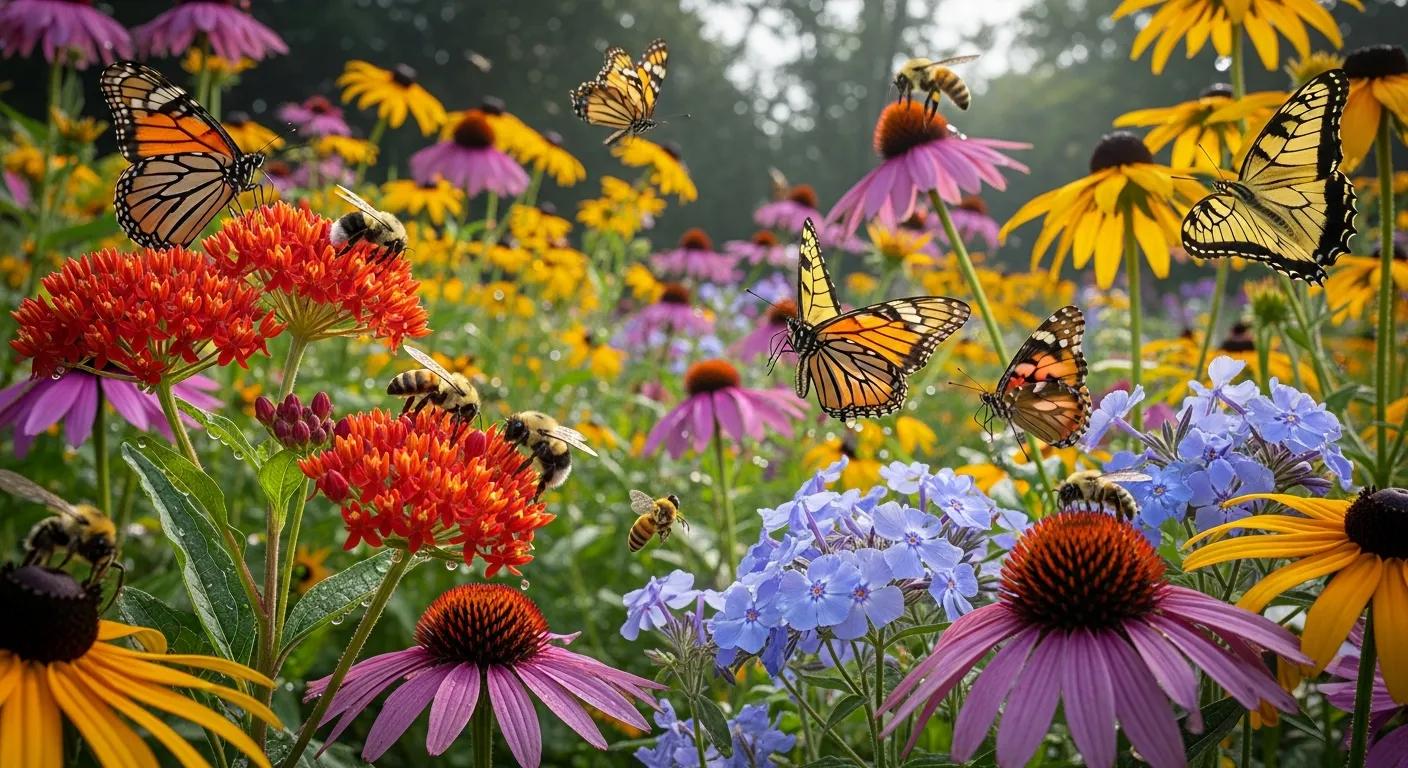
Pollinator habitat loss is the gradual shrinking and breaking apart of the places bees, butterflies, and other pollinators need to nest, feed, and complete their life cycles. That loss chips away at the pollination services that keep wild ecosystems intact and our food on the table. This guide walks through how habitat change, pesticides, and climate stressors drive pollinator declines, how those changes ripple through biodiversity and crop yields, and—most importantly—what practical steps homeowners, growers, and community leaders can take to help. You’ll find clear explanations, hands-on habitat tips, guidance on responsible beekeeping, and a frank look at how Huckle Bee Farms ties its practices to pollinator conservation. Our goal is to blend current science with down-to-earth how-to advice so you can act confidently to support bees, butterflies, and the landscapes they depend on.
What Are the Primary Causes of Pollinator Decline?
Pollinators are slipping because of a handful of broad, interacting threats: shrinking and fragmented habitat, widespread pesticide exposure, climate-driven changes in timing and range, disease and parasites, and invasive species that alter the plants pollinators rely on. Each factor hits pollinators in a specific way—fragmentation isolates populations and narrows floral options, pesticides cause both immediate death and hidden behavioral harms, and parasites spread more easily when bees are stressed or crowded. Seeing these drivers together helps target solutions at the right scale, from yard projects to landscape planning.
Here’s a quick, searchable summary of the main drivers and what they do.
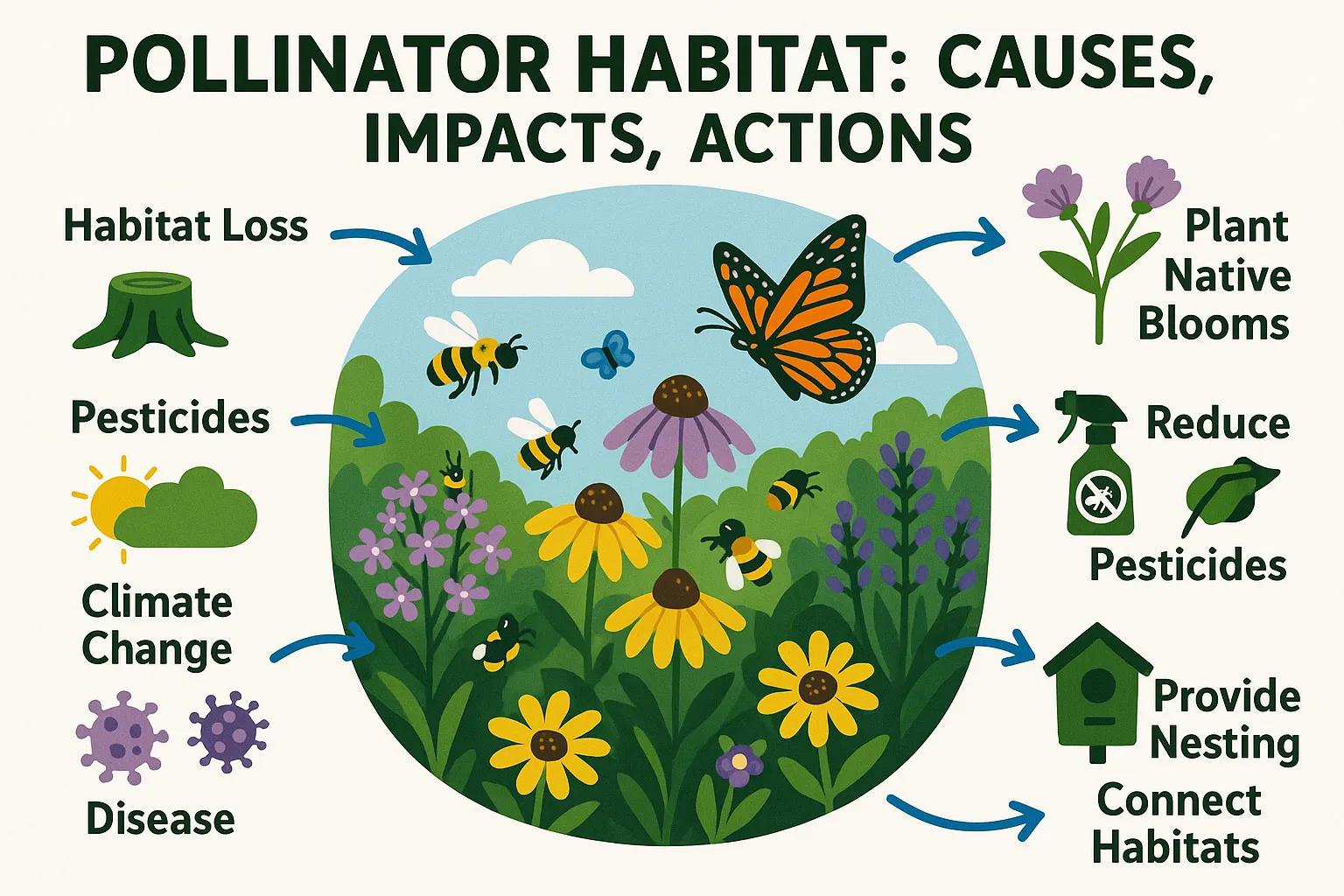
Pollinator decline is driven by four primary factors:
- Habitat loss and fragmentation: Converting meadows, hedgerows, and native plant areas removes the flowers and nesting spots pollinators need.
- Pesticide exposure: Insecticides and some herbicides can kill pollinators outright or cause subtle problems with navigation, foraging, and reproduction.
- Climate change: Shifts in temperature and rainfall alter flowering schedules and pollinator ranges, producing timing mismatches.
- Disease and invasive species: Parasites, pathogens, and nonnative plants weaken pollinator populations and reduce quality forage.
These threats don’t operate alone—habitat loss, for example, can push bees closer to pesticide-treated crops—so meaningful recovery requires combined approaches. Next, we dig into pesticide impacts so you can weigh risks and prioritize safer choices.
This table compares major pesticide groups, how they work, where they’re commonly used, and documented effects on bees to help you assess risk and set mitigation priorities.
| Pesticide Class | Mode of Action | Common Crop Uses | Documented Impacts on Bees |
|---|---|---|---|
| Neonicotinoids | Systemic neurotoxin (targets nicotinic acetylcholine receptors) | Seed treatments and foliar applications on grains, orchard trees, and vegetables | Sublethal navigation and foraging problems; developmental and colony-level consequences |
| Organophosphates | Acetylcholinesterase inhibitors (neurotoxic) | Broad use across field crops and orchards | High acute toxicity; rapid mortality after direct contact |
| Pyrethroids | Sodium channel modulators (neurotoxic) | Foliar sprays for many crops | Acute toxicity and behavioral effects; persistence varies |
| Herbicides | Growth regulators or photosynthesis disruptors | Widespread use in row crops, pastures, and turf | Indirect harm by removing wildflowers and nesting plants |
This comparison shows risk comes from both direct toxicity and loss of floral resources, underscoring the need to cut reliance on systemic insecticides and protect noncrop wildflower communities. Next: how fragmentation itself undermines pollinator populations.
How Does Habitat Loss and Fragmentation Affect Pollinators?
When habitat shrinks and becomes patchy, foraging areas and nesting sites become smaller and less connected. That reduces how many individuals an area can support and makes populations more vulnerable to bad years, disease, and genetic decline. Different species are affected at different scales—honey bees may fly kilometers for forage, while many solitary bees need intact habitat within a few hundred meters—so losses at multiple scales matter. Landowners can help by creating corridors and adding native-flower plantings to reconnect patches, restoring consistent food sources and nesting opportunities. Understanding fragmentation highlights why chemical and habitat stresses together are so damaging, which we cover next.
What Impact Do Pesticides Have on Bee Populations?

Pesticides affect bees through immediate poisonings and more subtle, long-term harms. Systemic compounds like neonicotinoids can turn nectar and pollen into exposure routes—so bees contact chemicals even when sprays aren’t visible. Sublethal doses can disrupt navigation, learning, immune defenses, and brood development, lowering colony performance over weeks and seasons. Herbicides don’t always kill bees directly but remove the wildflowers and nesting plants pollinators need. Practical steps for gardens and farms include choosing non-systemic options, timing applications when pollinators are inactive, creating flower-rich buffer zones, and always following label directions to reduce accidental harm.
Cutting pesticide reliance lays the groundwork for habitat restoration to succeed and helps pollinators better withstand other pressures.
How Does Climate Change Influence Pollinator Health and Behavior?

Climate change alters temperatures, rainfall patterns, and the frequency of extreme weather—factors that change pollinator physiology, daily activity windows, and where species can live. Warming can push suitable habitat north or uphill, creating range shifts that some species can’t follow. More extreme storms and altered precipitation can reduce blooms and flood nests. Those direct effects are joined by changes in plant timing, which can desynchronize when pollinators are active and when flowers bloom. Practical, adaptive steps—like increasing plant diversity, providing microhabitat refuges, and watching local bloom and emergence timing—help buffer pollinators against climate variability. The next subsections explain heat and storm impacts and timing disruptions in more detail.
What Are the Effects of Rising Temperatures and Extreme Weather on Pollinators?
Higher temperatures change metabolic rates and activity periods, and heat stress can lower survival and reproductive success. During heatwaves, bees shorten foraging to cooler hours, reducing food intake and brood care; heavy rains and storms can flood ground nests and damage cavities used for nests. Weather extremes also interact with disease dynamics, often making stressed pollinators more susceptible to parasites. Simple garden-level measures—providing shade, shallow water, and sheltered nesting spots—can make a real difference during extreme events and complement broader landscape actions to preserve seasonal floral resources.
How Does Climate Change Disrupt Plant-Pollinator Relationships?
When plants bloom earlier or later than usual, pollinators and their food sources can fall out of sync. For example, an early spring bloom can finish before some solitary bees emerge, and migratory pollinators may miss peak nectar flows. Planting for temporal redundancy—choosing species that stagger blooms across the season and including both early- and late-flowering natives—reduces mismatch risk. Regularly observing local phenology and using regionally adapted native plants also helps keep plant-pollinator relationships resilient as the climate shifts.
What Are the Consequences of Pollinator Habitat Loss on Ecosystems and Food Security?
Losing pollinator habitat undermines biodiversity by reducing plant reproduction and shrinking populations of species that depend on pollinated plants. That loss ripples through food webs and can lower yields for many fruits, nuts, and vegetables, with real economic consequences for growers and nutritional impacts for people who rely on pollinator-dependent foods. Identifying which crops depend most on animal pollination shows where conservation investments can protect both biodiversity and food production. Below is a short list of key consequences and a table that links crop dependence with likely yield effects.
Key ecological and food-security consequences include:
- Biodiversity loss: Fewer pollinated plants mean fewer habitats and food sources for other wildlife.
- Crop yield reductions: Many fruits, nuts, and vegetables need pollinators for good quantity and quality.
- Economic impact: Lower yields hit growers’ bottom lines and can increase costs for consumers.
- Nutritional risk: Less availability of pollinator-dependent foods can reduce access to key vitamins and minerals.
These effects vary by crop and region, so targeted habitat support on farms and in nearby landscapes can protect both wild diversity and food supplies.
| Crop | Estimated Pollinator Dependence | Potential Impact on Yield/Value |
|---|---|---|
| Almonds | Very high (large-scale reliance on insect pollination) | Major production losses without managed pollinators |
| Apples | High (fruit set depends on pollinators) | Lower fruit set and reduced quality, hurting orchard returns |
| Blueberries | High (yields improve with insect pollination) | Fewer berries and smaller fruit size without adequate pollination |
| Cucumbers | Moderate (benefit from pollinator visits) | Reduced yields and inconsistent quality |
Both specialty crops and many everyday vegetables rely on pollinators, so habitat loss is an ecological concern with direct agricultural and food-security implications.

Which Conservation Strategies Can Help Mitigate Pollinator Habitat Loss?
No single fix will do it—successful conservation mixes habitat restoration, reduced chemical exposure, and maintenance of nesting resources. Actions span from backyard gardens planned for continuous bloom to farm-scale wildflower strips and community corridors that reconnect fragmented areas. Policy incentives, pesticide restrictions, and support for sustainable beekeeping help scale on-the-ground work. Below is a clear, step-by-step list you can follow whether you’re a homeowner, land manager, or municipal planner.
Follow these steps to create resilient pollinator habitat:
- Plant native, diverse flowering species so there’s nectar and pollen from spring through fall.
- Reduce pesticide use by using integrated pest management and choosing non-systemic or mechanical controls when possible.
- Provide nesting resources like bare-ground patches for mining bees and woody stems for stem-nesters.
- Connect habitats with hedgerows and corridors to support movement and gene flow among pollinator populations.
Applying these steps at multiple scales—yard, farm, and landscape—lowers extinction risk and boosts pollination for crops and wild plants. The sections that follow give practical detail on building habitat and how sustainable beekeeping fits into broader conservation work, plus ways consumers can support these efforts.
How Can Creating Pollinator-Friendly Habitats Support Bee Populations?
Pollinator-friendly habitats give bees steady food, safe nesting spots, and microclimates that ease weather extremes—conditions that raise survival and reproductive success. Plan for bloom succession by mixing early-, mid-, and late-season native plants so nectar and pollen are available across the active season. Leave bare ground and retain woody stems for nesting, and pick species adapted to your region. In Pennsylvania, for example, late-season goldenrods and asters, spring ephemerals, and native clovers and legumes are excellent choices. Below is a short checklist to help you get started.
Start a pollinator project with this checklist:
- Map sunny, sheltered planting spots and mark areas for ground-nesting habitat.
- Choose a diverse mix of native plants that bloom from spring through fall.
- Avoid mulch in nesting zones for ground-nesters and keep dead stems for stem-nesters.
- Provide shallow water and wind breaks to lengthen foraging time and reduce heat stress
What Role Does Sustainable Beekeeping Play in Pollinator Conservation?
Sustainable beekeeping supports conservation by keeping colonies healthy, increasing local forage, and minimizing disease spillover to wild pollinators. Good practices include integrated pest management for Varroa, planting diverse forage near apiaries, and placing hives with landscape context in mind. Consumers can back these efforts by buying from beekeepers who prioritize small-batch, habitat-friendly methods and who invest in education and restoration—market demand that rewards stewardship. The checklist below outlines practical apiculture steps and consumer actions that help pollinators at scale.
Sustainable beekeeping checklist:
- Use integrated pest management to control pests while limiting chemicals.
- Boost forage diversity near apiaries to reduce nutritional stress.
- Monitor and manage disease responsibly to avoid concentrating pathogens.
- Engage in community education and habitat work to broaden conservation impact.
Backing sustainable beekeepers helps ensure managed pollination complements—not competes with—wild pollinator health. Next, we show how producer programs and purchases can channel real support into habitat work.
After reviewing these strategies, you may wonder how products and programs from mission-driven producers actually fund habitat work. We use Huckle Bee Farms as an example of how offerings and outreach can translate to conservation outcomes.
How Does Huckle Bee Farms Support Pollinator Health Through Its Practices?
Huckle Bee Farms centers its practice on small-batch, artisanal production and transparent sourcing while running education and donation programs that support pollinators. The company offers 100% pure raw honey and flavored varieties like Espresso, Bourbon, Salted Caramel, and Cinnamon, along with handcrafted teas, and highlights a mission that includes consumer education about honey and pollinator needs. Programs labeled "Help Pollinators" and "Donate to Save the Pollinators," plus an Adopt-A-Bee-style option, let customers contribute directly to habitat and outreach. The table below links these initiatives to the kinds of conservation outcomes they can support so you can see how purchases translate into action.
| Initiative or Product | Practice/Attribute | Conservation Outcome |
|---|---|---|
| Small-batch, artisanal honey | Minimal processing; raw, handcrafted product | Supports a smaller-scale supply chain that can prioritize habitat-friendly sourcing |
| Infused honey varieties (Espresso, Bourbon, Salted Caramel, Cinnamon) | Value-added product lines that diversify revenue | Creates funds that can be directed to habitat and education projects |
| Help Pollinators / Donate to Save the Pollinators | Donation and outreach options on the site | Channels customer contributions to on-the-ground pollinator work and awareness campaigns |
| Adopt-A-Bee program | Engagement and fundraising offering | Directly links buyers with conservation funding and educational materials |
This mapping shows how transparent product choices and donation options can support habitat work and education, reflecting Huckle Bee Farms’ veteran-owned, Pennsylvania-founded, mission-driven approach.
What Sustainable Practices Does Huckle Bee Farms Implement?
Huckle Bee Farms highlights small-batch production and raw, never-pasteurized honey as part of a quality-and-transparency approach. That mindset pairs with outreach and donation programs aimed at supporting pollinator projects rather than large-scale industrial production. By offering handcrafted teas and a curated set of infused honeys, the business creates revenue streams that can fund conservation and education without overtaxing local forage. If you want to support pollinators directly, participating in Adopt-A-Bee or donation options listed by the company is a straightforward way to help.
These practices show how small-scale beekeepers can mix product quality with outreach and fundraising to keep operations pollinator-friendly, and they set the stage for how consumer purchases feed into conservation outcomes.
How Does Purchasing Huckle Bee Farms Honey Contribute to Pollinator Conservation?
Buying honey and related items from mission-minded beekeepers like Huckle Bee Farms sends dollars to small-scale, education-focused operations that host donation and Adopt-A-Bee programs. According to the company’s information, proceeds and program engagement support habitat projects and outreach—creating a clear link between retail purchases and conservation activity. Choosing artisanal, raw honey and handcrafted teas from a veteran-owned Pennsylvania business signals support for sustainable practices, local stewardship, and greater awareness of pollinator needs. If you want a direct role, joining an Adopt-A-Bee program or using the "Donate to Save the Pollinators" option are practical, qualitative ways to contribute.
These consumer choices complement hands-on habitat work and policy action, combining market support, restoration, and responsible management to protect pollinators.
Frequently Asked Questions
What are some effective ways to create a pollinator-friendly garden?
Start with diverse native plants that bloom at different times so pollinators have food all season. Prioritize species that provide both nectar and pollen, avoid pesticides, and create nesting spots by leaving small patches of bare ground and keeping dead stems for stem-nesters. Add shallow water sources and sheltered areas to help pollinators stay active and healthy.
How can community initiatives enhance pollinator conservation efforts?
Community groups can multiply impact by planting pollinator gardens in parks, creating corridors that link fragmented habitat, and hosting workshops to teach residents about pollinator-friendly practices. Local campaigns can also push for policies that limit harmful pesticides and fund native-plant incentives—actions that turn individual efforts into landscape-scale gains.
What role do native plants play in supporting pollinators?
Native plants have co-evolved with local pollinators and often provide the exact nectar and pollen those species need. They’re adapted to local soil and climate, so they’re usually easier to maintain and require fewer inputs. Planting natives brings a wider variety of pollinators and supports a healthier local ecosystem.
How can farmers implement sustainable practices to protect pollinators?
Farmers can adopt integrated pest management (IPM) to cut pesticide use, add wildflower buffer strips, rotate crops and diversify plantings, and enroll in conservation programs that offer technical and financial support. These practices boost on-farm biodiversity and improve resilience while maintaining productivity.
What are the economic benefits of supporting pollinator health?
Healthy pollinators improve yields and quality for many fruits, vegetables, and nuts—supporting farmer income and broader food supply. Investing in pollinator habitat can lower losses and reduce the need for costly inputs, helping local economies and food security over the long term.
How does climate change specifically affect pollinator populations?
Climate change shifts where and when plants bloom and alters weather extremes, which can desynchronize pollinators and their food sources and damage nests. It also intensifies other threats like habitat loss and disease, so adaptive measures—planting diverse, regionally suited species and creating refuges—are critical to sustaining pollinator populations.
Conclusion
Protecting pollinator habitat matters for biodiversity, resilient ecosystems, and the food we rely on. By understanding the main threats and adopting practical conservation steps—planting native flowers, reducing pesticides, providing nesting habitat, and supporting sustainable beekeepers—individuals and communities can make a measurable difference. Start small, join local efforts, and explore resources and programs in your area to take the first steps toward stronger pollinator habitats today.
About the Author - Jim Douglas, Founder of Huckle Bee Farms
Jim started Huckle Bee Farms. It is a family company. They make small batches of raw and infused honeys. Jim loves to cook at home. He creates easy recipes. He is a beekeeper and loves nature. He cares about bees and plants. Jim puts his passion into every bottle. When he is not with his bees, he shares tips. He shares recipes and bee facts. His goal is simple: to make life sweeter, naturally.


