Create Charming DIY Tea Candles for Aromatherapy Bliss
DIY Tea Candles: Scented & Decorative Creations with Natural Ingredients for Aromatherapy and Eco-Friendly Living
Follow a simple, step-by-step guide to create charming DIY tea candles using natural ingredients for a warm, handcrafted glow perfect for home décor, relaxation, and gifting.
Table of contents

Small, hand-poured tea candles are an easy, thoughtful way to bring soft light, gentle aromatherapy, and homemade gifts into your home. This guide shows you how to make scented, decorative tea lights using natural ingredients—especially beeswax and honey—so you get cleaner burns, warm layered scent, and materials that fit a low-waste lifestyle. If you want candles that skip synthetic fragrances and heavy soot but still give a consistent, pleasant scent, natural waxes and honey-accented notes are a smart route. Read on for what tea candles are, which natural ingredients work best, step-by-step safe methods for honey-accented tea lights, aromatherapy pairings, and styling and gifting ideas that celebrate pollinators and sustainability. Expect clear tips, ingredient comparisons, recipe-style instructions, and safety notes so you can make reliable, beautiful tea candles at home with a mindful maker’s approach.
We’ll touch on sourcing and product suggestions just enough to help you find quality beeswax and infused honey without interrupting the how-to steps. You’ll get a straightforward materials list, hands-on recipes with measurements and troubleshooting notes, plus plain comparisons that explain how beeswax and honey differ from soy or paraffin. By the end you’ll know how to make scented tea candles and how to style and package them in ways that honor pollinators and thoughtful craft.
What Are DIY Tea Candles and Why Use Natural Ingredients?
DIY tea candles are small, single-wick candles usually poured into thin metal cups or small containers for short, contained burns. They’re perfect for mood lighting, quick aromatherapy moments, and little gifts. Natural ingredients like beeswax and honey help these candles burn cleaner, add a subtle warm aroma, and come from renewable sources—important for indoor air quality and conscious living. Natural waxes often burn longer and with less soot than paraffin, and they pair naturally with essential oils for aromatherapy. Here are the main reasons makers reach for natural materials for tea lights.
Natural tea candles give three practical benefits for home aromatherapy and eco-minded makers:
- Cleaner burn: Natural waxes such as beeswax typically release fewer particulates and leave less soot on surfaces.
- Authentic aroma: Beeswax and honey contribute a warm, layered scent that blends smoothly with essential oils.
- Sustainability: Responsibly sourced beeswax and small-batch infused honey support local beekeepers and pollinator-friendly practices.
Those benefits add up to better indoor air quality and a more pleasant, longer-lasting scent. Next, we’ll look at how honey and beeswax each influence candle performance.
How Do Honey and Beeswax Enhance Tea Candle Quality?
Beeswax improves candle performance with a higher melting point, steady combustion, and a natural honeyed base note that enriches scent without additives. Its denser structure gives a slow, even burn and a bright, steady flame—fewer tunnels and longer total burn time compared with softer waxes. Raw or infused honey, used carefully as an infusion or a concentrated extract, can add warm floral or herbal top notes that complement essential oils and deepen the overall fragrance. Because both ingredients come from beekeeping, they also carry a story: choosing traceable beeswax and small-batch infused honey supports local apiaries and pollinator health.
Use honey thoughtfully: adding liquid honey directly to hot wax can cause spattering or adhesion problems, so many makers work with honey-infused wax or a tiny amount of concentrated honey extract to keep burn quality steady. The next section lays out the best natural ingredients and the trade-offs to consider when making scented tea lights.
Which Natural Ingredients Are Best for Scented Tea Candles?

Choosing the right natural ingredients depends on the scent strength you want, how the candle burns, and your sustainability priorities. Core options include beeswax, raw honey, infused honey, essential oils, and soy as a plant-based alternative. Beeswax gives a warm base note and a cleaner burn; raw honey adds delicate sweetness when used safely; infused honey captures botanical highlights; and essential oils provide targeted aromatherapy. The table below shows how these materials differ by scent contribution, burn behavior, and pollinator impact.
| Ingredient | Scent Contribution | Burn Quality | Sustainability / Pollinator Impact |
|---|---|---|---|
| Beeswax | Mild, honeyed base note | High: steady flame, low soot | Positive when purchased from transparent, small-scale apiaries |
| Raw Honey (small use) | Delicate sweet, floral nuances | Neutral if used as an infusion or extract; avoid adding liquid | Supports local beekeepers when sourced traceably |
| Infused Honey | Concentrated botanical or citrus highlights | Good if converted into a wax-friendly extract | Can showcase local botanicals and reward pollinator-friendly practices |
| Soy Wax (alternative) | Neutral base that takes essential oils well | Moderate: softer wax, may tunnel | Plant-based, though environmental impacts depend on farming methods |
| Paraffin (conventional) | Often paired with synthetic fragrances | Lower: more soot, shorter burns | Petroleum-derived and less sustainable |
This comparison explains why many makers favor beeswax combined with targeted essential oils or a touch of infused honey for balanced scent and burn. Next we’ll cover the practical benefits and safe ways to use raw and infused honey in candle making.
What Are the Benefits of Raw and Infused Honey in Candle Making?
Raw honey contributes a nuanced sweetness and a warm, slightly food-like aroma that can round out floral or citrus essential oils when used correctly. Infused honey—made by steeping herbs, citrus peel, or flowers in honey—acts as a concentrated scent carrier and can deliver distinct top notes depending on the infusion (for example, lavender, rosemary, or lemon). In practice, most makers use an infused-honey extract or add a very small percentage of infused honey to melted wax to avoid introducing moisture. Another option is scenting wax with a concentrated honey extract to capture similar aromatics. Keep honey additions conservative: prioritize essential oils for scent throw and treat honey notes as accents rather than the primary fragrance.
Always test small batches for stability and watch wick performance so you don’t compromise a steady burn. Understanding how beeswax behaves under heat will help you decide whether to blend, infuse, or top-dress with honey-scented elements.
Why Choose Beeswax for Aromatherapy Tea Lights?
Beeswax is an excellent base for aromatherapy tea lights because it burns cleanly and slowly, brings a subtle natural scent, and generally produces less soot than paraffin. Its higher melting point supports a healthy melt pool with the right wick, so essential oils and botanical notes disperse more reliably. Scent-wise, beeswax’s honeyed backbone pairs especially well with warm essential oils like bergamot, lavender, and sweet orange—giving balanced blends without a synthetic edge. And when you buy beeswax from traceable, small-batch beekeepers, your purchase helps sustain local apiculture and pollinator-friendly stewardship.
With ingredient choices settled, let’s move into a step-by-step process for making scented tea candles at home with safety and consistency in mind.
How Do You Make Scented Tea Candles at Home?

Making scented tea candles at home follows a few dependable steps: gather quality natural materials, control melting temperatures, blend scent carefully, secure wicks, pour into cups, and let candles cure before burning. Temperature control is the key—melt beeswax in its working range, add fragrances at a temperature that preserves volatile aromatics, and pour steadily to avoid air pockets. Choosing and placing the right wick ensures a full melt pool and even burn, and safe handling plus good ventilation keeps you protected while you work. Below is an essential materials list and a concise step-by-step method for honey-accented beeswax tea lights.
Materials and tools you will need:
- Beeswax pellets or pastilles: the primary clean-burning fuel.
- Wicks: cotton or wooden tea light–sized wicks with tabs.
- Essential oils and a small amount of infused honey or honey extract: for scent accents.
- Double boiler and thermometer: for steady, safe melting.
- Tea light cups or small tins: approved containers for tea candles.
With those basics on hand, follow the steps below to turn ingredients into burn-ready tea lights.
- Prep your workspace and tools: Clear a heat-resistant area and set up your double boiler, thermometer, and containers. Good prep prevents spills and keeps things safe during pouring.
- Melt beeswax slowly: Use a double boiler and heat beeswax to 160–175°F (71–79°C), checking your thermometer often. This range protects the wax and preserves fragrance.
- Add scent: Remove the wax briefly from heat and stir in essential oils (commonly 6–10% by weight for beeswax) and any concentrated honey extract; keep honey amounts minimal to avoid moisture issues.
- Position wicks and pour: Center and secure wicks in the cups, then pour the wax slowly to reduce air pockets. Let candles set at room temperature away from drafts for several hours.
- Cure and trim: Allow candles to cure 24–48 hours, then trim wicks to 1/4 inch before the first burn to encourage a clean, even flame.
Follow these steps and watch the first burn carefully—wick sizing and scent loading will determine final performance. The table below summarizes common techniques, timing, and recommended safety practices.
| Technique | Difficulty / Time | Best Practices / Tools |
|---|---|---|
| Double boiling wax | Easy / 10–20 mins | Use a thermometer; avoid direct flame; maintain 160–175°F |
| Scent blending | Moderate / 5–10 mins | Add oils off-heat; aim for a 6–10% fragrance load for beeswax |
| Wick centering | Easy / Variable | Secure the wick tab; use a centering tool or a clothespin |
| Honey infusion into wax | Moderate / 15–30 mins | Work with a concentrated extract or pre-infused wax; avoid adding liquid honey directly |
| Finishing & curing | Easy / 24–48 hrs | Cure at room temperature; trim wicks to 1/4 inch before burning |
This overview helps you match methods to project size and safety needs. Next are two beginner-friendly honey-infused recipes to try right away.
Always melt wax using a double boiler and never leave it unattended.

What Are Easy Honey-Infused Tea Candle Recipes?
Below are two straightforward recipes: a classic beeswax tea light with a honey accent and a citrus-herb version using infused honey. Each recipe includes measurements, timing, scent expectations, and a quick troubleshooting note for common issues like weak scent or tunneling.
- Basic Honey-Accented Beeswax Tea Light: 100 grams beeswax pellets, melted. 6–8 grams essential oil blend (for example, lavender + bergamot). 2–3 grams concentrated honey extract (about one teaspoon of a concentrated infused-honey extract). Melt beeswax to ~165°F, remove from heat, stir in oils and extract, pour into tea light cups with centered wicks, and cure 24–48 hours. Troubleshooting: If scent is weak, increase essential oils slightly in your next batch rather than adding more honey to avoid moisture-related problems.
- Citrus-Herb Infused Honey Tea Light: 100 grams beeswax, 8 grams lemon essential oil, 3 grams rosemary-infused honey extract. Create a rosemary-infused honey separately, then concentrate or extract it into a form safe for blending with wax. Expected scent: bright lemon top notes, a green herbal heart, and a warm honeyed base; burn time should be similar to plain beeswax tea lights. Troubleshooting: If the wick tunnels, try a slightly larger wick or ensure the candle reaches the container edge on the first burn.
These recipes are safe, small-batch ways to add honey-inspired aromatics while keeping wick choice and scent balance front of mind. The next section covers techniques that improve both safety and finish.
Which Candle Making Techniques Ensure Safe and Beautiful Results?
Techniques that affect safety and appearance include precise temperature control while melting, adding scent at the right moment, choosing and centering the wick correctly, and finishing methods like topping and smoothing the wax surface. A reliable thermometer prevents overheating beeswax and protects delicate essential oils; adding scent when the wax is a bit cooler helps retain aromatics while still promoting even dispersion. Match wick size to container diameter and wax hardness—undersized wicks tunnel, oversized wicks can smoke—so test burns are worth the time. Finishing touches, like smoothing tops with a warmed spoon or doing a thin re-pour, give a clean, professional look and prevent surface flaws.
Stick to these techniques for consistent, safe results, and you’ll be better equipped to evaluate the beeswax and infused honey you buy for future projects.
What Are the Aromatherapy Benefits of Natural Tea Candles?
Tea candles made with beeswax, honey-accented notes, and complementary essential oils can support relaxation, mood lift, or sleep—depending on the botanicals you choose. Beeswax’s cleaner burn helps essential oils diffuse without the masking effect that soot or petroleum carriers can cause, and honey notes add a comforting warmth that pairs well with calming florals or bright citrus blends. Think about room size and burn time when pairing scents—lighter oils like bergamot or lemon are great for short sessions and small rooms, while heavier florals paired with beeswax suit longer relaxation in larger spaces. The table below links common ingredients to aromatherapeutic properties and suggested uses.
| Ingredient | Aromatherapeutic Property | Benefit / Suggested Use |
|---|---|---|
| Beeswax | Neutral carrier and warm base note | Promotes clean diffusion; great for longer burns in living spaces |
| Honey (infused notes) | Comforting, cozy top note | Adds a comforting layer—ideal for relaxation or cozy evenings |
| Lavender essential oil | Calming, sleep-supportive | Use for bedtime or evening wind-down |
| Bergamot essential oil | Uplifting, mood-lifting | Use for stress relief and midday refresh |
| Lemon essential oil | Bright, clarifying | Use in kitchens or workspaces for focus and freshness |
This guide helps you match ingredients to the aromatherapy result you’re after and informs scent pairings for different rooms and occasions. Next we’ll cover how ingredient choices relate to pollinator health and sustainable sourcing.

How Do Honey and Beeswax Support Pollinator Health and Sustainability?
Buying raw or infused honey and responsibly sourced beeswax from traceable suppliers helps support local apiaries and pollinator conservation. Those purchases create market value for beekeepers who maintain healthy hives and habitats. Responsible sourcing means choosing small-batch producers who use sustainable hive management and avoid harmful treatments—practices that promote biodiversity and protect local floral resources. Simple next steps you can take include buying from traceable sellers, planting pollinator-friendly flowers, and supporting local beekeeping education or conservation efforts. Those consumer choices make a tangible connection between your craft purchases and pollinator health.
Backing pollinators through mindful buying and small actions extends the ethical story behind your candles and pairs naturally with essential oil blends that complement honey-forward scents.
Which Essential Oils Complement Honey-Infused Candle Scents?
Honey-forward tea candles pair well with essential oils that add sweetness, herbal depth, or bright lift. Lavender and chamomile soothe and relax; bergamot and lemon brighten and uplift; rosemary and thyme bring herbal clarity that works nicely with floral honey notes. For beeswax-based candles, typical blending ratios range between 6–10% essential oil by wax weight—use stronger oils more sparingly and always test small batches. Keep safety in mind: observe proper dilution, avoid certain oils around pets or pregnant individuals when necessary, and follow established essential-oil safety guidance.
Reliable pairings to try:
- Lavender + Honey: Gentle and sleep-friendly.
- Bergamot + Honey: Uplifting with warm sweetness.
- Lemon + Rosemary + Honey: Bright, clearing, and herbaceous.
These combinations will help shape your recipes and how you describe finished candles for gifting or selling.
How Can You Decorate and Gift Homemade Tea Candles?
Decorating and gifting homemade tea candles is a chance to raise perceived value with eco-friendly packaging and a short pollinator story. Use recycled kraft boxes, cotton twine, and plantable seed-paper inserts to keep materials low-impact. Decorative options include rustic twine wraps and kraft tags, floral-embedded tops, or minimalist stamped lids—each style lets you match the look to the scent and occasion while staying sustainable. Packaging that tells the ingredient story—calling out beeswax, raw or infused honey, and pollinator support—adds authenticity and helps recipients understand the environmental benefits. Below are popular decorative styles and a practical packing approach.
Popular decorative styles for tea lights include:
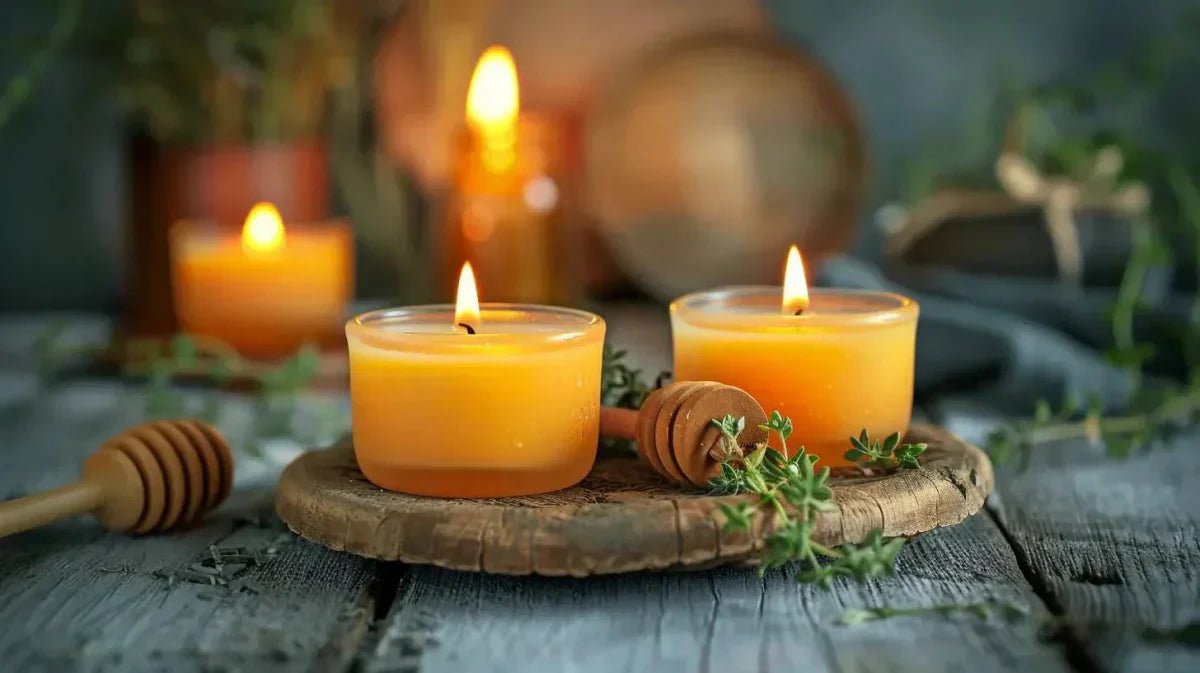
- Rustic jar presentation: Small glass holders tied with twine and a kraft tag that lists the scent and pollinator support.
- Floral-embedded tops: Pressed dried petals set carefully into the surface (kept away from the wick); secure with a thin re-pour as needed.
- Minimalist stamped packaging: Recycled kraft boxes stamped with ingredients and a brief pollinator message.
Pick a style that fits the scent and values you want to convey. The next section gives a simple method for eco-friendly gift assembly and example label text.
What Are Popular Decorative Styles for Tea Lights?
These three decorative trends pair materials and finishing techniques for attractive, gift-ready candle presentation while keeping safety and sustainability in mind. Rustic styles suit cozy, honeyed blends; floral embeds complement botanical infusions; minimalist labels highlight provenance and ingredient quality. Use plant-based adhesives and keep any decorative element well away from the wick and flame.
These looks adapt easily for small sales or personal gifts. Now let’s look at packaging that carries a pollinator-forward message.

How to Package Eco-Friendly Candle Gifts with Pollinator Awareness?
Eco-friendly candle packaging means choosing recyclable or compostable materials, adding a short label that notes beeswax and honey sourcing, and including a small action item like a seed packet or pollinator-care tip. A suggested short label reads: "Beeswax tea light scented with lavender and honey-infused notes; proceeds support local pollinator-friendly practices." Use recycled kraft boxes, cotton twine, and seed paper to keep waste low while sharing your values. Don’t forget a clear safety insert with burn instructions and wick-trimming tips so recipients enjoy their candles safely.
- Use recycled kraft boxes and plantable seed paper: Reduce waste and reinforce the pollinator message.
- Include a short pollinator-support insert: Encourage planting native blooms and offer a couple of simple actions to help local bees.
- Label ingredients clearly: Call out beeswax and honey-infused scent notes so recipients know what’s inside.
These packaging steps complete the DIY process and show how making and gifting tea candles can be both beautiful and responsible.
If you prefer ready supplies or curated bundles, Huckle Bee Farms LLC offers natural raw and infused honey, responsibly sourced beeswax, and educational resources that support pollinator stewardship and mindful craft—helping you source materials with confidence while staying true to sustainable practices.
💡 Pro Tips for Perfect DIY Tea Candles
Choose natural wax for a cleaner burn: Beeswax or soy wax burns longer and produces less soot than paraffin, making your tea candles better for indoor air quality.
Secure wicks before pouring: Use a wick holder or pencil across the container to keep the wick centered while the wax cools for an even, professional finish.
Pour slowly at the right temperature: Allow melted wax to cool slightly before pouring to reduce air bubbles and surface cracking.
Let candles cure fully: Allow tea candles to set for at least 24 hours before burning to improve burn quality and scent throw.
Trim wicks for best performance: Always trim wicks to about ¼ inch to ensure a steady flame and prevent smoking
From selecting natural ingredients to pouring and finishing each candle, DIY tea candles offer a simple, rewarding way to create cozy ambiance and thoughtful handmade gifts with lasting charm.
Frequently Asked Questions
1. Can I use other types of wax for making tea candles?
Yes—while we often recommend beeswax for its clean burn and natural aroma, you can use other waxes like soy or responsibly sourced palm. Soy wax is a common plant-based alternative that takes scent well but can be softer and more prone to tunneling than beeswax. If you choose palm wax, opt for certified sustainable sources. Each wax has trade-offs, so match your choice to desired scent throw, burn time, and environmental priorities.
2. How do I choose the right wick for my tea candles?
Wick choice is key to even burning and good scent throw. Match wick size to the container diameter and the wax type—cotton or wooden wicks usually work well with beeswax. A wick that’s too small will tunnel; one that’s too large may smoke. Testing a few wick sizes in small batches is the best way to find the right fit for your formula.
3. What safety precautions should I take when making candles?
Safety first: work in a well-ventilated area, use a double boiler to control melting temperature, and never leave melting wax unattended. Wear heat-resistant gloves, avoid touching hot wax, and keep flammable materials away from your workspace. It’s also wise to have a fire extinguisher on hand. Following these precautions keeps your candle-making sessions safe and stress-free.
4. How can I enhance the scent throw of my tea candles?
To improve scent throw, consider increasing essential oil concentration (typically 6–10% by weight for beeswax) and add oils at the right temperature—just below the wax’s melting point—to preserve aromatics. Use high-quality essential oils and consider a small amount of honey extract for complexity. Test different blends in small batches to find what performs best in your space.
5. What are some eco-friendly packaging ideas for gifting tea candles?
Eco-friendly packaging options include recycled kraft boxes, cotton twine, plantable seed paper, and simple kraft tags. Add a short insert with tips for supporting local pollinators or planting native flowers. If you add dried flowers or herbs as decoration, keep them away from the wick for safety. Thoughtful, low-impact packaging reinforces the handmade, sustainable story behind your candles.
6. How do I troubleshoot common candle-making issues?
Common problems include weak scent throw, tunneling, and uneven burning. If scent is weak, increase essential oils slightly in the next batch. Tunneling can often be fixed by using the correct wick size or ensuring the candle gets a full melt pool on its first burn. For uneven burning, check that the wick is centered and sized correctly. Keep notes on each batch so you can track what works.
7. Can I customize the colors of my tea candles?
Yes—natural colorants like beet juice for red or turmeric for yellow can tint your candles. Use them sparingly, since too much colorant can affect burn quality. Always test small batches to see how the color interacts with your chosen wax and scent so you keep performance while getting the look you want.
Conclusion
Making DIY tea candles with natural ingredients like beeswax and honey brings warmth to your home and supports more sustainable practices and pollinator health. Choosing these materials gives you a cleaner burn and an authentic scent experience that enhances aromatherapy and cozy moments. Enjoy the process—experiment with blends, refine your technique, and explore our curated ingredients to get started. Your journey to thoughtful, beautiful candle making begins here.

Author - Jim Douglas - Founder Huckle Bee Farms
Jim is the heart and hands behind Huckle Bee Farms, a family-run honey company dedicated to bringing small-batch, infused honeys from the hive to your table. As a passionate beekeeper, storyteller, and advocate for pollinators, Jim blends his love for nature and creativity into every bottle. When he’s not tending to the hives or experimenting with new honey infusions, you’ll find him sharing recipes, health tips, and bee wisdom with the Huckle Bee Farms community. His mission is simple: to make life a little sweeter—naturally.
5 Key Takeaways for Making DIY Tea Candles with Natural Ingredients
This list highlights the essential points to remember when creating your own scented tea candles using natural materials like beeswax and honey. These takeaways will help you achieve better results while promoting sustainability and enhancing your aromatherapy experience.
- Choose Quality Ingredients: Opt for responsibly sourced beeswax and infused honey to ensure a cleaner burn and authentic aroma, supporting local beekeepers and pollinator health.
- Control Melting Temperatures: Maintain a melting range of 160–175°F (71–79°C) to protect the wax and preserve the fragrance, ensuring optimal scent throw and burn quality.
- Use the Right Wick Size: Select a wick that matches the container diameter and wax type to prevent issues like tunneling or excessive smoke, ensuring an even burn and good scent distribution.
- Test Small Batches: Experiment with small quantities to refine your scent blends and wick choices, allowing you to troubleshoot common issues like weak scent or uneven burning effectively.
- Package Sustainably: Use eco-friendly materials for packaging, such as recycled kraft boxes and plantable seed paper, to enhance the gifting experience while promoting environmental consciousness.