


Honey in Ancient Civilizations: Exploring Food, Medicine & Rituals
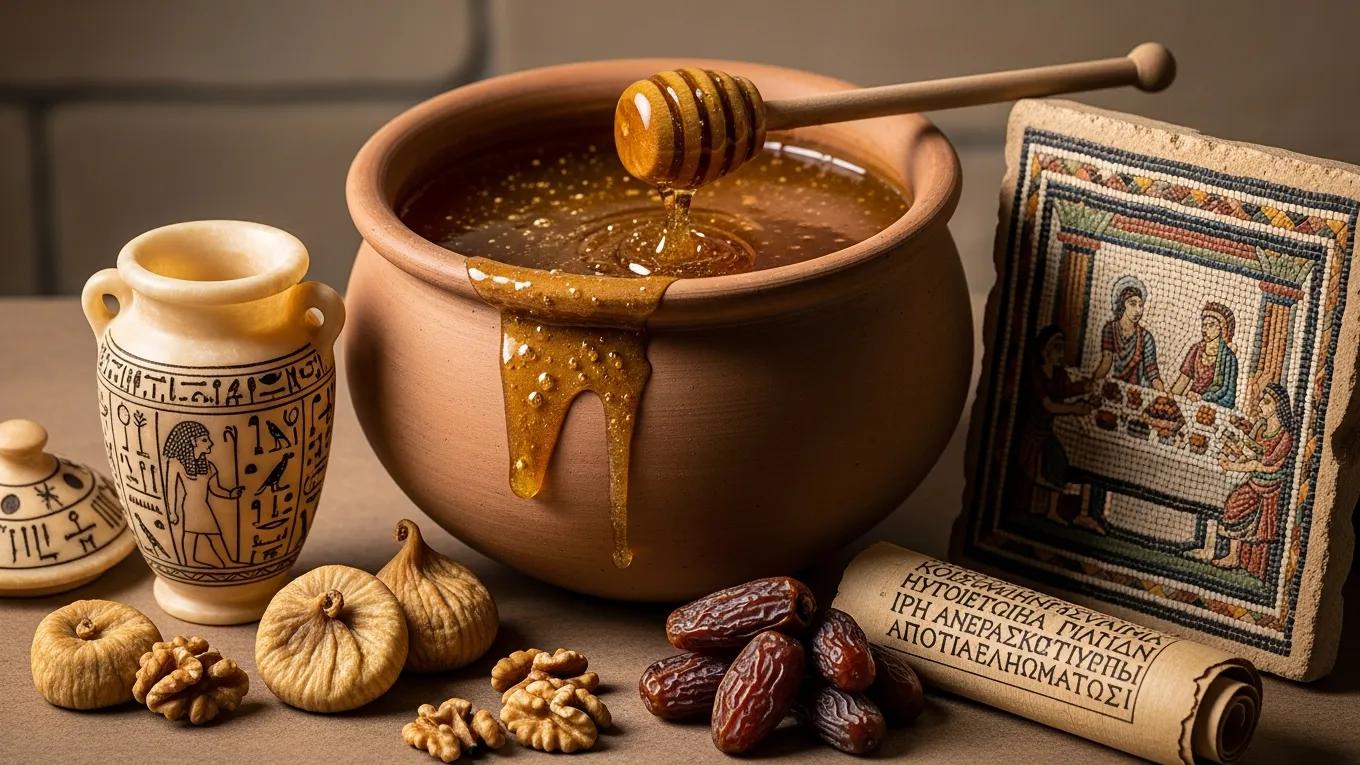
Honey has always been more than a simple sweetener. In antiquity it flavored food, held a place in practical medicine, and served as a sacred offering—binding everyday life, healing practice, and ritual across cultures. This guide walks through how people used honey in kitchens, clinics, and temples; why beekeeping and pollinators were central to early agriculture; and how modern raw and infused honeys echo those traditions. You’ll find archaeological context, clear summaries of historic recipes and remedies, quick-reference lists and tables, and practical ideas for cooking, supportive home use, and ceremonial practice. We cover culinary examples from Egypt, Greece, and Rome; documented medicinal roles and modern science that supports some of those uses; ritual meanings and symbolism; the history of beekeeping and pollinators; and ways contemporary raw and infused honeys carry ancient practice forward. Keywords such as honey historical uses, ancient honey, egyptian honey, honey medicinal uses history, and infused honey traditions remain woven through the text to make this material easier to find and apply.
What Were the Ancient Uses of Honey in Food Across Civilizations?
Across regions, people relied on honey for three main culinary purposes: as a sweetener, as a preservative, and as the fermentable base for drinks like mead. Honey’s high sugar content, low water activity, and natural antimicrobials helped slow spoilage and support fermentation—advantages long before refined white sugar was available. For cooks, honey stabilized preserves, sweetened breads and confections, and started alcoholic ferments. Those functional traits explain honey’s presence from Egyptian kitchens to Roman banquets, and why it was prized both for everyday cooking and for special occasions. Below we outline the core culinary roles, then look at regional examples that show how the same properties produced different dishes.
Ancient culinary applications of honey fall into a few clear categories:
- Honey as a sweetener for breads, porridges, and sauces.
- Honey as a preservative for fruits, nuts, and dairy preparations.
- Honey as the fermentable base for mead and other honey-based drinks.
These uses illustrate honey’s flexibility across food systems and set up specific historical examples.
How each culture paired honey with local ingredients shaped distinctive flavors and recipes, even while serving similar functions. The comparison below highlights those parallels and differences before we look more closely at Egyptian practice.
Different societies combined honey with regional staples and techniques, showing how similar needs produced parallel culinary inventions across distant places.
How Did Ancient Egyptians Incorporate Honey in Their Recipes?
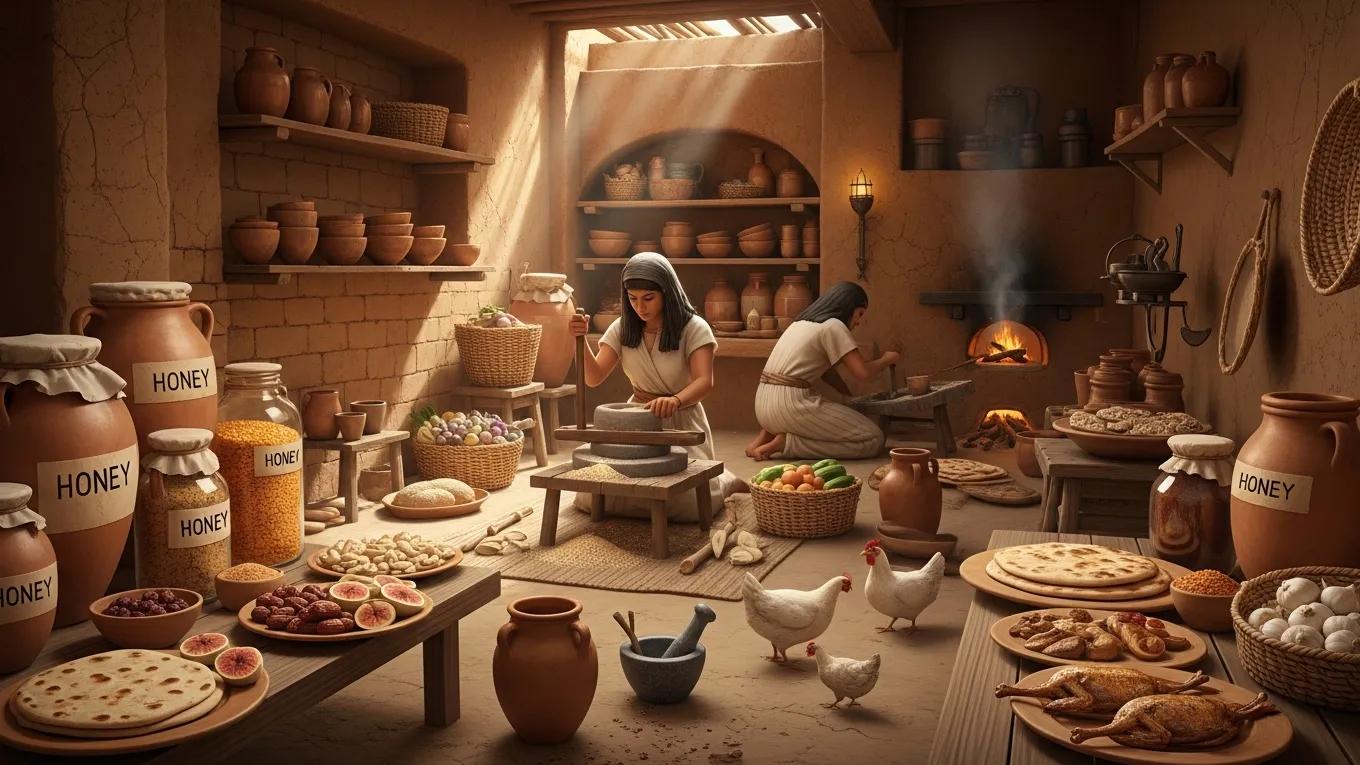
In Egypt, honey shows up in tomb offerings, temple inventories, and sealed storage jars—used to sweeten flatbreads, preserve figs and dates, and glaze meats and pastries. Temple and funerary texts record honey given to priests and included in burial provisions, where its preservative power and symbolic purity mattered alongside its flavor. You can echo these techniques today by using raw honey as a finishing glaze on flatbreads or roasted vegetables; the approach offers a practical nod to antiquity while letting the honey’s floral character come through. Egyptian uses fit into broader Mediterranean patterns and lead naturally into notable honey-based recipes from classical sources.
What Are Notable Historical Honey Recipes from Ancient Cultures?
Surviving recipes and literary descriptions point to mead (fermented honey wine), honey cakes and pastries, and syrups or preserves that extended the life of fruit and cheese. Greek and Roman writers describe honey dishes served at festivals and feasts, and archaeological residues confirm honey’s role in confections and mead-making across Europe and the Near East. Modern cooks can adapt these traditions—swap raw or lightly infused honey for sugar in rustic honey cakes, or try a simple home mead to explore ancient fermentation methods. These recipes reveal a clear culinary through-line from past to present.
A structured comparison of food roles across major civilizations clarifies shared patterns and specific preparation methods that persisted through antiquity.
| Civilization | Culinary Use | Typical Pairings & Methods |
|---|---|---|
| Ancient Egypt | Sweetener, preservative, offerings | Honey with flatbreads, figs, dates; glazed pastries and sealed storage jars |
| Classical Greece | Confections, mead, sweet sauces | Honey with cheese, nuts, wine; festival foods and votive cakes |
| Roman Cuisine | Sauces, desserts, fermented drinks | Honey in sauces (mulsum), honey cakes, preserved fruits |
| Mesoamerican (contact-era parallels) | Sweetening and ceremonial use | Honey from native stingless bees paired with maize cakes and ceremonial foods |
What Medicinal Properties Did Honey Have in Ancient History?
Across time and place, honey appears in remedies for wounds, coughs, digestive complaints, and as a carrier for compound medicines. Its effects come from straightforward chemistry: osmotic pressure that draws fluid away from microbes, naturally low pH, enzymes that generate small amounts of hydrogen peroxide, and plant-derived compounds with antimicrobial or soothing activity. Healers in Egypt, Greece, India, and China used honey in poultices, syrups, and salves because it protected tissues and made bitter botanicals easier to take. Comparing those traditional uses with modern evidence makes it clearer which claims hold up and which deserve caution. Below are common historical roles, followed by a table that pairs remedies with contemporary evaluations.
Historic medicinal uses of honey cluster into these categories:
- Wound care and topical dressings: Honey applied to wounds and ulcers as a protective, antimicrobial layer.
- Respiratory remedies: Oral syrups and thickeners combining honey with herbs to soothe coughs.
- Digestive supports: Honey used to calm gastric upset and as a palatable carrier for medicinal botanicals.
These categories formed the backbone of later medical traditions; the table below helps read historic recipes against modern research.
| Remedy | Claimed Property (Ancient) | Modern Evidence / Notes |
|---|---|---|
| Honey poultice for wounds | Antiseptic, healing promoter | Certain honeys inhibit bacteria and support wound closure; medical‑grade honeys are used clinically with supporting studies |
| Honey for coughs | Soothing, antitussive | Randomized trials show honey can reduce cough frequency and severity in children compared with no treatment or placebo |
| Honey with herbs for digestion | Soothing, anti-inflammatory | Some evidence points to honey’s mild prebiotic and soothing effects; added herbs should be evaluated case by case |
Which Ancient Civilizations Used Honey for Healing and Medicine?
Medical texts from Egypt, Greece, India (Ayurveda), and China name honey in a range of remedies—from topical salves to oral syrups and complex compound formulas. Egyptian papyri list recipes mixing honey with resins and herbs for wound care; Greek and Roman physicians folded honey into humoral treatments; Ayurveda used honey as an anupana (a vehicle) for medicines; and Chinese traditions employed honey to harmonize and moisten formulas. These parallel practices show honey functioning both as an active agent and as a carrier for other treatments.
What Scientific Evidence Supports Honey’s Historical Medicinal Benefits?
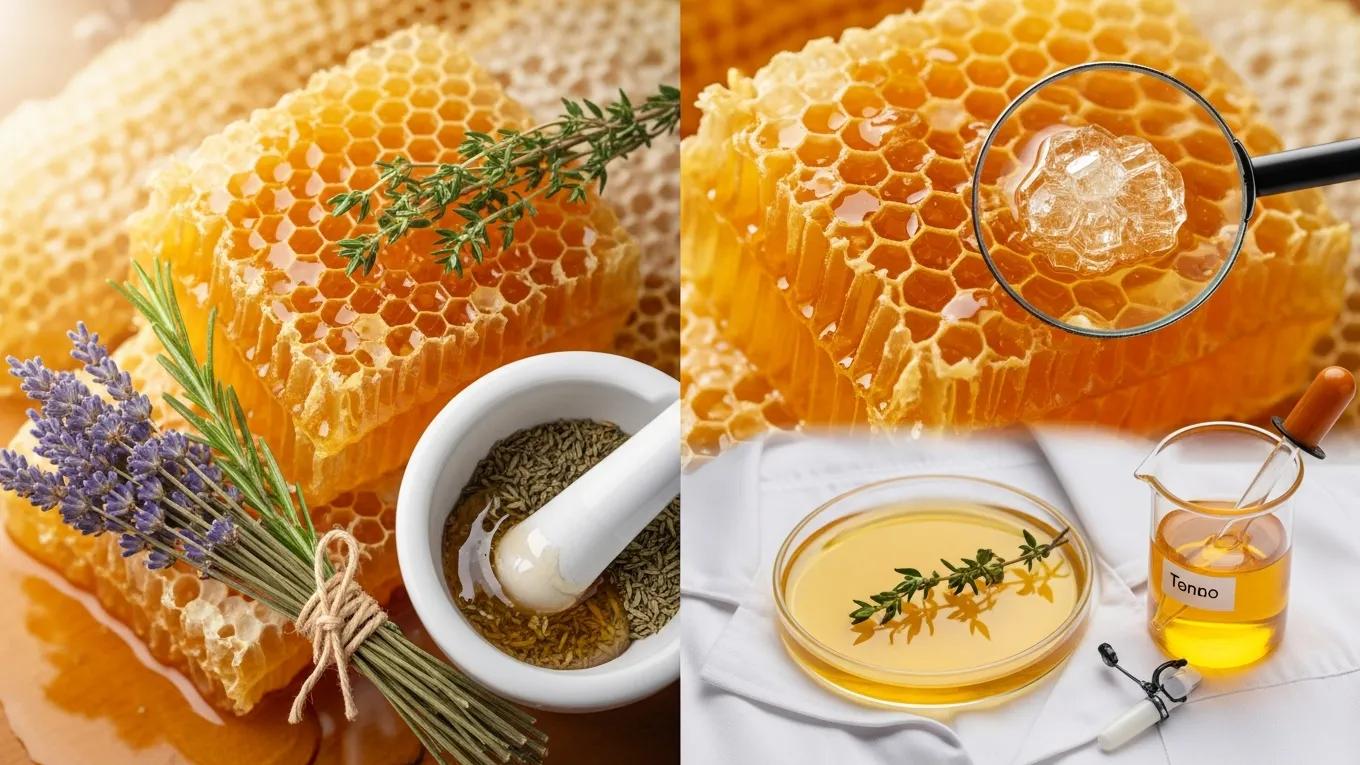
Modern research helps explain many traditional observations: high osmolarity can inhibit microbial growth, glucose oxidase produces low levels of hydrogen peroxide, and diverse plant compounds add antimicrobial and anti-inflammatory effects. Clinical trials support honey’s benefit for pediatric cough, and controlled studies endorse certain medical‑grade honeys for wound care. Effectiveness varies by honey type and application—clinicians favor medical-grade products for serious wounds, while raw honey may be recommended as a complementary option with attention to contamination risks. Understanding these mechanisms and limitations helps readers connect ancient practice with current evidence and make safer sourcing choices.
Huckle Bee Farms LLC produces raw and infused honey with an emphasis on sustainable beekeeping and pollinator health. Our products are presented as modern continuations of historic uses, and we provide educational material so people can experiment with historical recipes or supportive home practices responsibly. For serious medical concerns, consult a healthcare professional rather than relying on home remedies alone.
How Was Honey Used in Rituals and Symbolism in Ancient Cultures?
Honey’s ritual power came from its sweetness, longevity, and its link to pollinators—qualities that suggested purity, life, and preservation. Civilizations used honey in votive offerings, embalming, and libations because it was durable, valuable, and rich in symbolic meaning. The same preservative traits that kept food and bodies intact also made honey useful in sacred contexts. Below are common ritual applications and examples that illustrate honey’s symbolic weight.
Common ritual uses of honey included:
- Offerings to deities and spirits to invoke fertility or favor.
- Embalming and funerary inclusions to signify preservation and continuity.
- Votive cakes or honeyed libations used in festivals and rites.
These practices show how honey was woven into sacred economies and social life; the examples that follow focus on Egyptian and Greek contexts.
What Roles Did Honey Play in Egyptian and Greek Rituals?
In Egypt, honey appears in tomb inventories and temple records where it accompanied foods and aromatic resins as part of mortuary provisions. In Greece, honey was offered on altars and baked into votive cakes for deities like Demeter and Artemis—acts that tied sweetness to fertility and divine favor during agricultural rites. Archaeology and texts together show honey functioning both practically and symbolically in ritual economies.
How Did Honey Symbolize Spiritual and Social Concepts Historically?
Across cultures honey symbolized purity, abundance, immortality, and social standing. It could be a luxury good, a ritual offering, or part of dowries and tribute. Because honey depends on pollinators and seasonal nectar flows, it naturally became associated with fertility and cycles of growth—powerful themes in rites tied to life stages and agricultural renewal. Today those symbolic threads survive in product stories and cultural narratives that link honey to natural goodness and continuity.
For quick recall, common symbolic themes include:
- Purity and sanctity in ritual offerings.
- Fertility and agricultural renewal in seasonal rites.
- Status and gift-giving as markers of social economy.
What Is the History of Beekeeping and Pollinator Importance in Ancient Times?
Beekeeping stretches back millennia. Early hives—hollow logs, clay pots, or woven skeps—let people keep colonies and harvest honey and wax while managing seasonal needs. Pollinators were essential to fruit, nut, and vegetable production, so tending bees supported food security and crop diversity. The history of apiculture shows an early balance between harvest and colony survival, a principle that still underpins sustainable beekeeping today. The next section outlines traditional practices and why pollinators mattered to ancient agriculture.
Traditional beekeeping emphasized several sustainability-minded techniques:
- Moveable or repairable hive forms that allowed relocation and reuse.
- Seasonal harvesting that left enough stores for colony survival.
- Landscape knowledge that matched hive placement to local nectar flows.
Those practices reflect ecological awareness and connect ancient methods to modern conservation concerns.
How Did Ancient Civilizations Practice Sustainable Beekeeping?
Many beekeepers practiced non‑destructive harvesting—removing honey while protecting brood and leaving enough stores for the colony. Clay, reed, and woven straw hives provided insulated, repairable homes that could be reused across seasons. Local floral calendars guided hive moves so bees had reliable nectar sources without overtaxing the landscape. These methods mirror contemporary sustainable beekeeping ideals and show continuity in apicultural thinking.
Why Were Pollinators Vital to Ancient Agricultural Societies?
Pollinators supported production of fruits, nuts, fiber plants, and many wild foods that increased dietary variety and farm resilience. Their services boosted yields and quality in measurable ways for ancient farmers. A decline in pollinators would have reduced fruit set, cut surpluses for storage and trade, and strained ritual economies dependent on agricultural abundance. Recognizing this ecological–economic link helps explain why societies valued and managed pollinators—and why pollinator conservation still matters.
To summarize apicultural practices, the table below maps traditional hive types, management features, and sustainable outcomes.
| Hive Type / Practice | Characteristic | Sustainable Outcome |
|---|---|---|
| Hollow-log and clay hives | Durable, repairable structures | Low-impact harvesting and reusable nests |
| Seasonal harvest timing | Align harvest with nectar flows | Colony overwinter survival |
| Non-destructive extraction | Partial comb removal, brood protection | Long-term apiary productivity |
How Do Modern Raw and Infused Honey Products Connect to Ancient Traditions?
Raw and infused honeys today continue several ancient themes: they preserve floral terroir, serve in kitchens and supportive home use, and make meaningful gifts with ritual echoes. Raw honey keeps more enzymes, pollen fragments, and volatile aromatics—giving deeper flavor and a stronger sense of place. Infusions recall historic flavorings where herbs, spices, or citrus were blended into honey for taste or symbolic effect. Knowing the differences between raw and processed honey—and how infusions reflect old practices—helps you choose the right product for cooking, supportive uses, or gifting. Below we contrast raw and processed honey, then outline infusion traditions and practical product suggestions, including how producers tell sourcing stories.
What Are the Benefits of Raw Honey Compared to Processed Varieties?
Raw honey retains pollen, volatile aromatics, and enzymes that add complexity to flavor and may support mild prebiotic or antimicrobial effects. Processed honeys are often heated and filtered to standardize appearance and shelf life. Choosing raw honey highlights terroir—wildflower, clover, or buckwheat notes—while accepting natural traits like crystallization and particulates as signs of minimal processing. Understanding that trade-off helps match product choice to culinary, supportive, or gifting aims.
A short table maps product traditions to suggested modern uses for clarity.
| Product/Tradition | Attribute (flavor/ingredient/sourcing) | Suggested Use |
|---|---|---|
| Raw wildflower honey | Floral complexity, pollen presence | Finish dishes, try in historical recipe adaptations |
| Infused herb honey | Botanical notes (thyme, lavender) | Pair with cheeses, use for gifts or ritual offerings |
| Lightly filtered honey | Uniform appearance, mild flavor | Reliable baking and consistent culinary measurement |
Huckle Bee Farms LLC offers a selection of raw and infused honeys focused on sustainable beekeeping and pollinator health, framed as ways to taste ancient flavors while supporting ecological stewardship. Our educational resources encourage safe experimentation with recipes and responsible home practices, and invite participation in pollinator preservation efforts.
How Do Infused Honey Products Reflect Historical Uses and Rituals?
Infused honeys—made by marrying honey with herbs, spices, or citrus—mirror historical flavoring techniques where local botanicals were blended for culinary, medicinal, or ceremonial purpose. Think thyme or rosemary with honey for savory glazes, citrus or lavender for desserts and tea, or warming spices in gift jars that recall ritual offerings. Clear labeling that names floral sources and infusion stories helps consumers connect to terroir and tradition, while offering versatile uses for cooking, home support, and ceremonial gifting. These sensory and narrative choices bridge past and present.
Huckle Bee Farms LLC is an online shop and information hub offering high-quality raw and infused honeys and promoting sustainable beekeeping and pollinator health. Our guides help you recreate historical recipes, explore supportive home practices carefully, and join community efforts for pollinator conservation. If you want to experience raw or infused honey traditions, check our product pages and educational materials for pairing ideas, recipes, and stewardship tips—and consider joining community initiatives that support natural living and pollinator preservation.
Frequently Asked Questions
What are the different types of honey used in ancient rituals?
Ancient rituals used a variety of honeys, chosen for source and purpose. Wildflower honey—valued for rich flavor and associations with abundance—was common in offerings. Honeys from particular floral sources were sometimes infused with herbs or spices to enhance ceremonial meaning. Those choices reflected local agriculture and the symbolic value communities placed on different floral origins.
How did ancient civilizations view the relationship between honey and health?
Many ancient cultures treated honey as both food and medicine—an everyday elixir. In Egypt and Greece it featured in remedies for wounds, coughs, and digestion. Honey was prized for its preservative and soothing qualities and often served as a carrier to make other medicines more palatable. That longstanding view shaped medical practice across regions.
What role did honey play in trade among ancient civilizations?
Honey was a desirable and durable commodity in ancient trade networks. Egyptians, Greeks, and others exchanged honey not only as a sweetener but for medicinal and ritual uses. Its long shelf life and broad appeal made it a valuable trade item that helped spread culinary and medical practices between regions.
How did the symbolism of honey evolve over time in different cultures?
Honey’s symbolism shifted with cultural context but kept common threads: it began as a divine or sacred substance linked to purity and immortality, then broadened to signify prosperity, fertility, and social status. Ritual uses reinforced its sacred standing. Today honey often symbolizes natural goodness and sustainability—an echo of older meanings adapted to modern values.
What are some modern uses of honey that reflect ancient practices?
Many modern uses mirror ancient practices: raw honey as a natural sweetener, infused honeys flavored with local botanicals, and home remedies for coughs or skin care. These continuities show how honey remains both a culinary staple and a supportive ingredient in everyday life.
How can I incorporate ancient honey recipes into my modern cooking?
Start small: use raw honey instead of sugar in rustic honey cakes, drizzle it over cheese as a nod to ancient pairings, or try a simple homemade mead-style ferment. You can also infuse honey with local herbs to make syrups and spreads that recall historic preparations. Experimenting with quality raw or infused honey connects you to tradition while keeping flavors fresh.
Conclusion
Honey’s roles in ancient civilizations—as food, medicine, and ritual—show how one natural product shaped daily life and belief. Tracing those historic uses and their modern echoes helps us appreciate honey’s continued place in kitchens, home remedies, and ceremonial life. We invite you to explore raw and infused honeys to experience these traditions firsthand—taste the terroir, try a recipe, and support pollinator-friendly practices. Discover our selection of premium honeys and join us in celebrating this remarkable natural resource.
Author - Jim Douglas - Founder Huckle Bee Farms
For Jim Douglas, beekeeping is a calling—one that links environmental stewardship to honest, unprocessed honey. After a career in the U.S. Army and leadership roles with the Boy Scouts of America, Jim founded Huckle Bee Farms in 2012 to return honey to its raw, unadulterated roots.
Jim’s small-batch approach emphasizes transparency and careful infusion of organic ingredients without compromising honey’s natural properties. He leads Huckle Bee Farms with the same integrity and commitment that guided his earlier work, aiming to make life a little sweeter—naturally.
Key Takeaways on Honey's Historical Uses in Food, Medicine, and Rituals
This list summarizes the essential insights about honey’s multifaceted roles in ancient civilizations, highlighting its significance in culinary practice, medicinal applications, and ritual symbolism.
- Honey as a Sweetener – Used to enhance the flavor of breads, porridges, and sauces, honey provided a natural alternative to refined sugars in ancient kitchens.
- Preservative Qualities – Honey's low water activity and antimicrobial properties made it an effective preservative for fruits, nuts, and dairy, extending the shelf life of various foods.
- Fermentable Base for Drinks – Honey served as a key ingredient in the production of mead and other fermented beverages, showcasing its versatility in ancient culinary traditions.
- Medicinal Applications – Historically, honey was utilized in wound care, cough remedies, and digestive aids, valued for its soothing and antimicrobial properties.
- Ritual Offerings – Honey was often used in religious ceremonies and funerary practices, symbolizing purity, fertility, and the connection between the divine and the earthly.
- Symbol of Abundance – Across cultures, honey represented prosperity and was frequently included in dowries and tributes, reflecting its status as a luxury good.
- Connection to Pollinators – The importance of honeybees in agriculture underscored the ecological balance necessary for food production, linking honey to sustainability and food security.


