Discover the Art of Baking with Honey
Baking with Honey: Tips and Tricks for Delicious Recipes
Baking with honey is one of the easiest ways to create moister baked goods, deeper flavor, and naturally golden color—but it requires a few smart adjustments. Because honey is sweeter and more hygroscopic than sugar, successful honey baking means using less sweetener, lowering oven temperature, and balancing liquids. This guide walks you through exact honey-to-sugar conversions, temperature tweaks, and pro baking tips so your cakes, cookies, muffins, and breads turn out perfectly every time—naturally sweet, never dry, and full of real honey flavor.
🐝 Quick Guide: Baking with Honey
The 3/4 Rule: Replace 1 cup of sugar with 3/4 cup of honey.
Reduce Liquids: Subtract 1/4 cup of liquid from the recipe for every cup of honey used.
Lower the Temp: Honey browns faster; reduce your oven temperature by 25°F.
Neutralize Acid: Add 1/4 tsp of baking soda per cup of honey to balance acidity and help with rising.
Best Honey for Baking: Use Clover or Wildflower for a mild taste, or Infused Honeys for a flavor boost.
Table of contents
Are there specific types of honey that work better for certain recipes? How can I prevent my cookies from spreading too much when using honey? What are some common mistakes to avoid when baking with honey?
Can I use honey in gluten-free baking? Author - Jim Douglas - Founder Huckle Bee Farms Key Takeaways for Baking with Honey

Swapping sugar for buckwheat honey in baking feels like a simple, cozy upgrade, right up until your muffins brown too fast or your cookies spread into a single shiny sheet, leading you to wonder how baking time changes when using honey and how to replace sugar with honey effectively, especially when balancing sweetness with honey.
Honey, known for its various honey benefits and antioxidants, can absolutely replace granulated sugar, but is honey better than sugar for baking? It rewards a small set of smart adjustments that enhance the flavor profile of your baked goods. Once you know the “why,” the “how” becomes repeatable, and you can start choosing honey not only for sweetness, but for flavor.
Why baking with honey is different from sugar
Refined sugar, like granulated sugar, is dry, crystalline, and neutral. Honey is mostly simple sugars (fructose and glucose) plus water, acids, and aroma compounds. That one change in form, from crystals to syrup, affects a lot.
Sugar crystals help with creaming butter. Those sharp edges cut tiny pockets into fat, trapping air and helping cakes and cookies lift. Honey does not create that same structure, so batters may rise a bit less and set with a closer crumb.
Honey also attracts and holds moisture, necessitating moisture adjustment baking with honey, which is why many wonder 'does honey make baked goods moist' when using it in their recipes. That’s wonderful for quick breads and snack cakes that you want to stay tender, but it can push a recipe into “gummy” territory if you do not reduce other liquids.
Then there’s browning. Honey tends to color faster than white sugar, especially around edges and on the bottom of the pan, so knowing what temperature to bake with honey is crucial.
Chef’s Tip: "When swapping sugar for honey, always let your bakes rest in the pan for 5 extra minutes; honey's natural humectant properties make the crumb extra tender, and this 'carry-over' time prevents the center from sinking."
— Chef Marcus, Local Artisan Baker
The core conversion rules (and why they work)
A dependable swap starts with three knobs you can turn: sweetness, sweetener flavor, moisture, and browning, to achieve that perfect sweet result.
Here are the rules many home bakers use as a baseline when replacing white sugar with healthy alternatives like honey, along with tips on how to bake with honey, including understanding how much honey equals one cup of sugar. They work well for cakes, muffins, quick breads, bars, and many cookies.
- Use less honey: Start with 2/3 to 3/4 cup of honey for each 1 cup of granulated sugar.
- Reduce added liquid: Cut about 1/4 cup of other liquids per 1 cup honey used.
- Lower the oven temperature: Drop the bake temp by about 15 to 25°F, then check a little early.
- Balance acidity (optional but helpful): Add 1/4 to 1/2 teaspoon baking soda per 1 cup honey, especially if a recipe has no baking soda, to help with acidity adjustments when baking with honey.
That’s the “recipe conversion” in one glance. The rest is choosing how strict to be based on what you’re baking.
If you want a cookie to stay thick, you might use closer to 2/3 cup honey per cup of sugar and chill the dough. If you want a moist tea cake, 3/4 cup honey often hits a lovely, tender texture.
A conversion chart you can keep on the fridge
This chart assumes you’re replacing granulated white sugar with honey. If your recipe uses brown sugar, you can still swap with honey, but the flavor shift will be bigger and the bake may turn even softer.
Granulated sugar in recipe Start with this much honey Reduce other liquids by Oven temp change Baking soda guidance
| 1/4 cup sugar | 3 Tbsp honey | 1 Tbsp | 0 to 10°F lower | Pinch, only if needed |
| 1/2 cup sugar | 1/3 cup honey | 2 Tbsp | 10 to 15°F lower | Up to 1/8 tsp |
| 3/4 cup sugar | 1/2 cup honey | 3 Tbsp | 15 to 20°F lower | 1/8 to 1/4 tsp |
| 1 cup sugar | 2/3 to 3/4 cup honey | 1/4 cup | 15 to 25°F lower | 1/4 to 1/2 tsp |
| 1 1/2 cups sugar | 1 to 1 1/8 cups honey | 1/3 cup | 20 to 25°F lower | 1/2 to 3/4 tsp |
A quick note: liquid reduction is easiest when the recipe has a clear liquid to pull from (milk, water, coffee, juice). If the only “liquid” is eggs and melted butter, reduce honey toward the 2/3 end and expect a slightly softer result.
🍯 Honey Conversion Calculator
Enter the sugar amount from your recipe:
🔥 Remember: Lower your oven temperature by 25°F!

Recipe-specific tips that actually change outcomes
Once you’ve used the baking with honey conversion rules a few times, the next step is adjusting recipes for honey and the style of bake, incorporating cinnamon honey baking tips to refine the process.
Cakes and cupcakes
Honey can make cakes smell amazing and stay moist for days, but the crumb often turns tighter because honey doesn’t cream like sugar.
After you’ve applied the basic conversion, try these small nudges:
- Add a touch more lift: 1/4 teaspoon extra baking powder per cup of flour can help (not always necessary).
- Choose lighter honey: mild wildflower or clover, like flavored honey for baking and clover honey, keeps vanilla and butter flavors in the lead.
- Protect the top: if the cake is browning early, tent loosely with foil for the last third of baking.
One sentence that saves a lot of cake: start checking doneness by temperature, not color.
Cookies and bars
Honey wants to spread. It melts early, it’s syrupy, and it encourages browning. That can be perfect for chewy bars and blondies, but tricky for crisp-edged cookies that need structure.
A few practical moves:
- Chill the dough: 30 to 60 minutes can make a dramatic difference.
- Use the lower honey range: 2/3 cup honey per 1 cup sugar often keeps cookies thicker, and consider using a baking with honey conversion chart to perfect the texture, especially if you're learning how to bake with honey.
- Watch the pan: dark sheets brown faster; a lighter pan buys you time.
If you love the flavor of honey but want a cookie to hold its shape, replacing only half the sugar is a very friendly starting point.

Muffins and quick breads
This is where honey benefits shine, but if you choose to substitute honey in recipes, consider making adjustments for consistency. Its moisture-retention helps muffins stay tender, and the flavor pairs beautifully with fruit, oats, nuts, cinnamon, and tea.
Still, quick breads can go from “moist” to “wet” if the batter is too loose. If you’re swapping honey into banana bread, zucchini bread, or pumpkin loaf, be decisive about reducing another liquid.
A small detail: let quick breads cool fully before slicing. Honey-rich loaves finish setting as they cool, and cutting too early can make the center seem underbaked.
Yeast breads and rolls
Honey dissolves fast and feeds yeast easily, so dough may ferment a bit quicker. That’s usually a plus, but it can surprise you if you walk away expecting the usual rise time.
If you’re sweetening a lean sandwich loaf, swap the sugar for honey, reduce water slightly, and keep an eye on crust color. If the loaf is getting too dark before the center is done, lower the oven temp and bake longer.

Best Honey for Baking
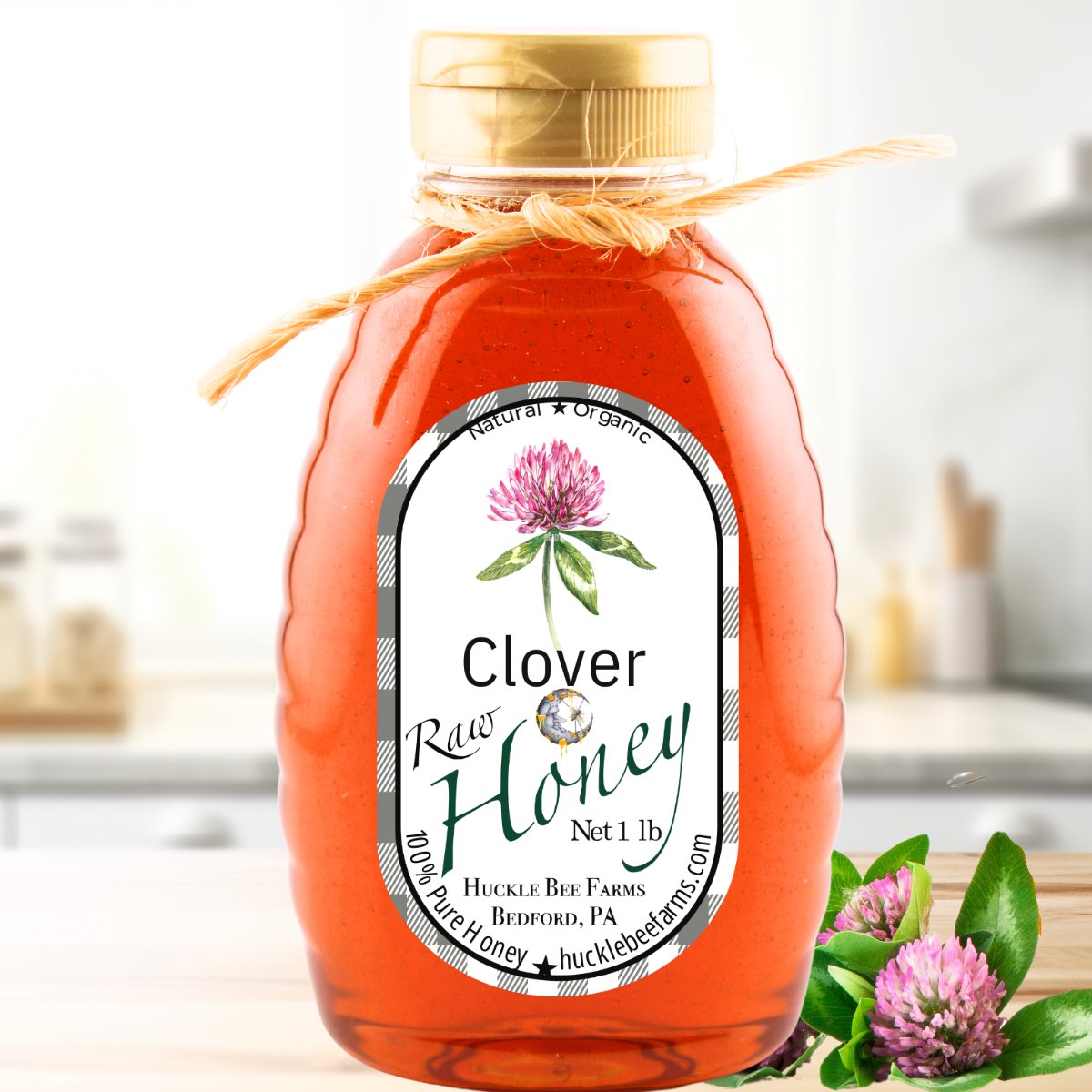
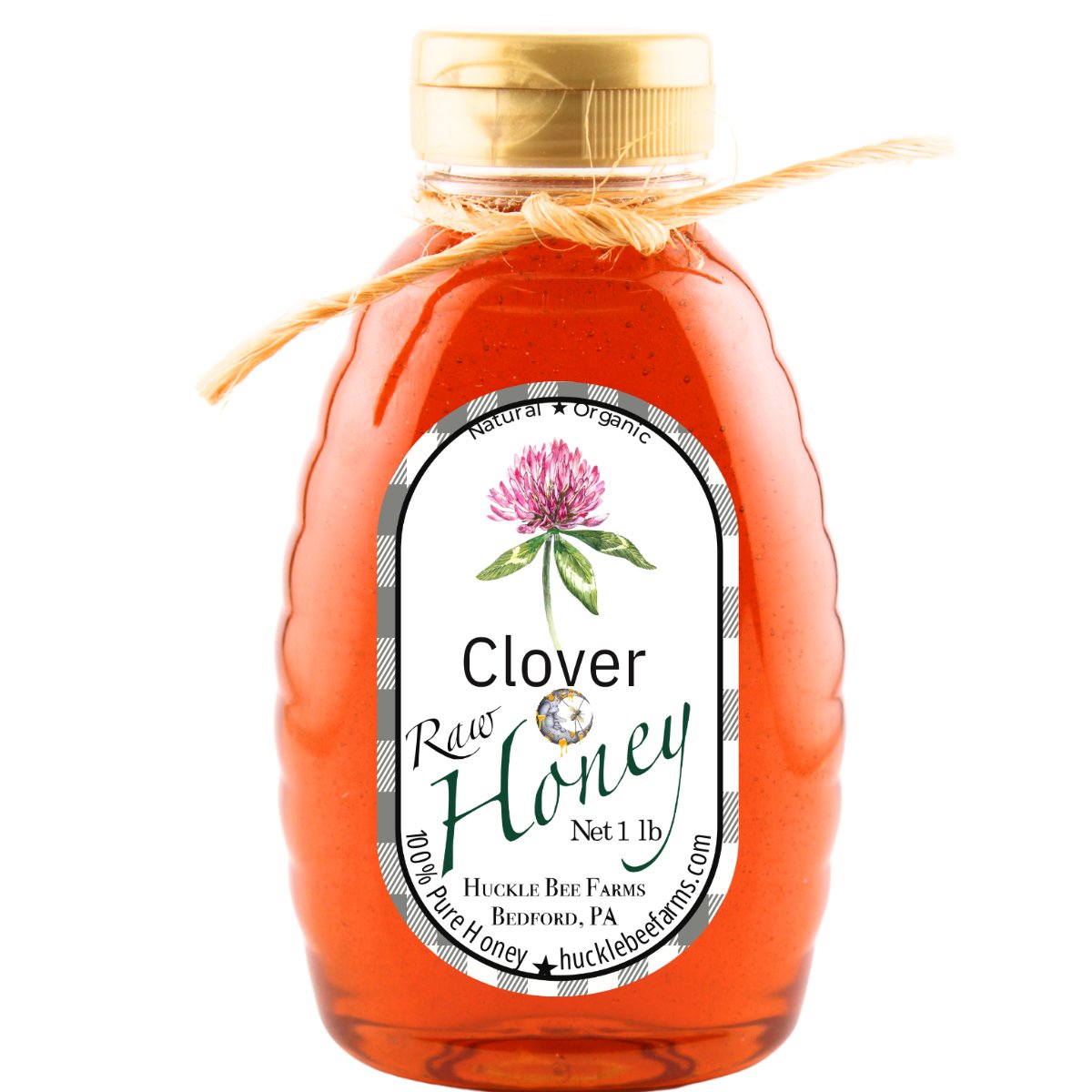
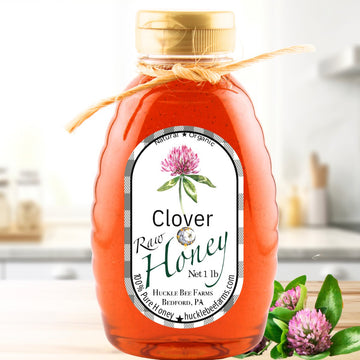
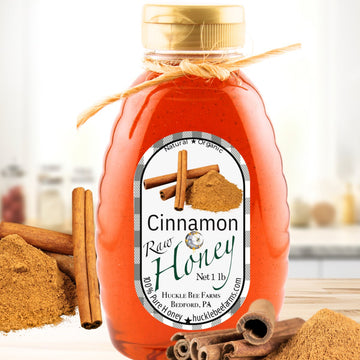
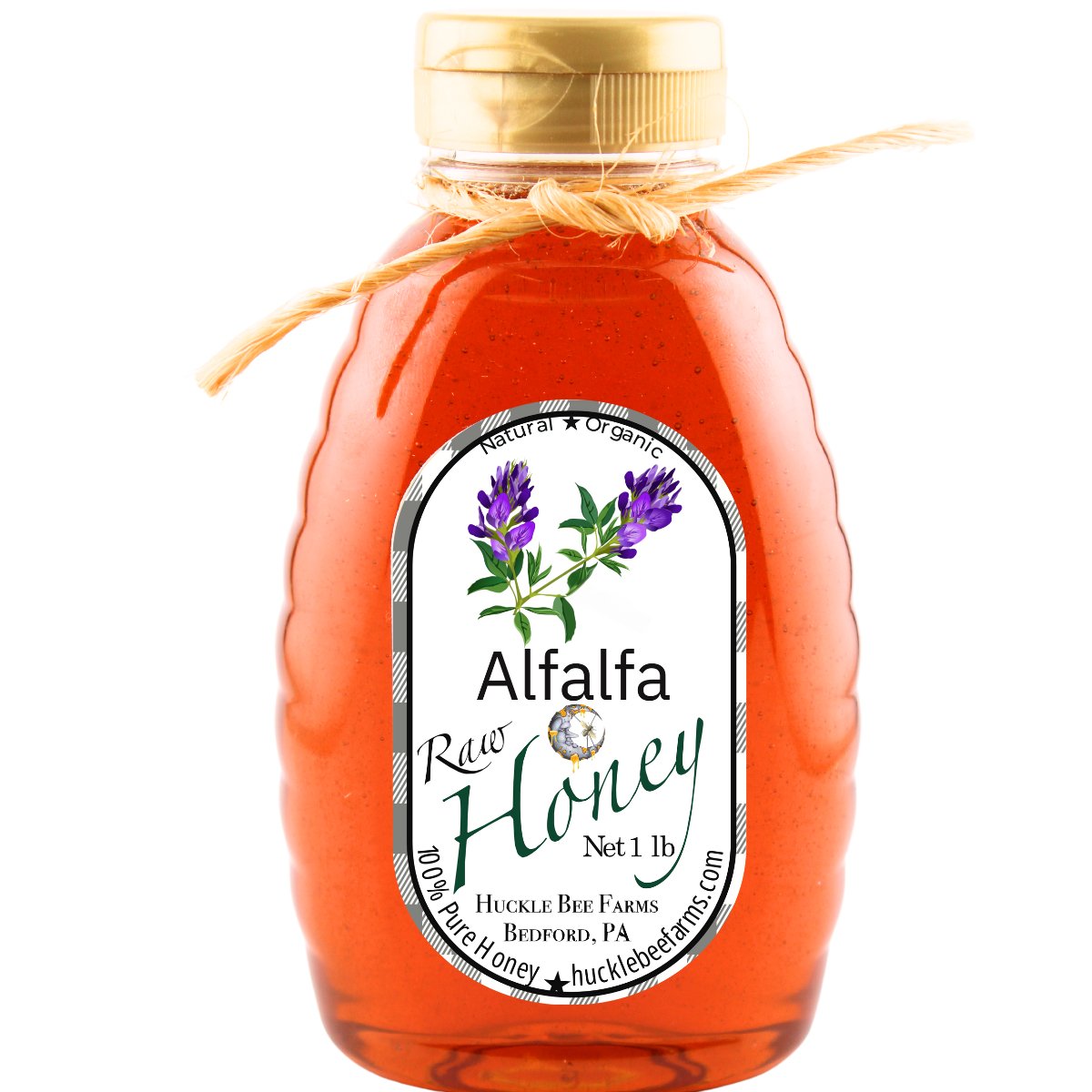
The best honey for baking is raw, mild-flavored honey that enhances sweetness without overpowering delicate recipes. Clover honey is the top choice for cakes, cookies, muffins, and quick breads because of its light floral taste, smooth texture, and reliable moisture retention. For recipes where deeper flavor is welcome—like spice cakes, banana bread, or oatmeal cookies— wildflower or cinnamon-infused honey can add subtle warmth and complexity. Avoid heavily filtered or artificial honey substitutes, as they lack the natural enzymes and moisture-binding properties that help baked goods stay soft, tender, and naturally golden.
Picking a honey that matches your bake
Honey is not just a simple sweetener; its sweet nature and variety change the whole personality of a recipe.
A mild honey gives sweetness without taking over. A darker honey brings molasses-like depth. Infused honey can add clear notes of citrus, herbs, smoke, or heat.
When a family-run apiary bottles honey on demand, freshness tends to show up in aroma, and that aroma survives baking more than people expect.
Here are a few pairing ideas many bakers enjoy:
- Light wildflower or clover: sugar-style sweetness for pancakes, vanilla cake, shortbread.
- Orange-infused or orange blossom-style profiles: bright with yogurt cakes, scones, glazes.
- Cinnamon, ginger, or seasonal spice infusions: easy win in apple crisp, pumpkin bread, oatmeal cookies.
- Smoked honey: brownies, pecan bars, bacon cornbread, anything with toasted nuts.
- Hot honey (used lightly): spicy edges in gingerbread, chocolate cake, or a drizzle over cornbread.
If you’re building gift boxes or party favors for bakers, sampler sets are a fun way to test flavors before committing to one honey for a signature recipe.
Measuring honey neatly (and accurately)
A tablespoon too much honey can push a batter from perfect to heavy, so understanding the flavor profile and ensuring accuracy in recipe conversion matters more than it does with sugar.
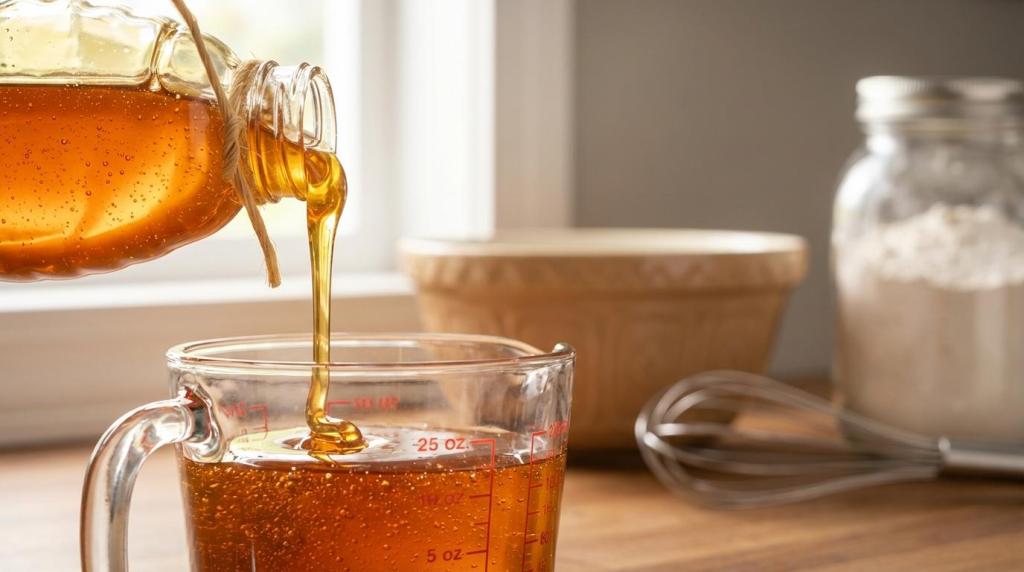
Most home bakers measure honey by volume, and that’s fine, but make it consistent. Coat the measuring cup with a thin film of neutral oil or a quick spritz of cooking spray so the honey slides out cleanly. You get the right amount, and you don’t end up adding extra while you fight the cup.
If you have a kitchen scale, weighing is even more reliable. Honey density varies by variety and temperature, and a scale removes that variable.
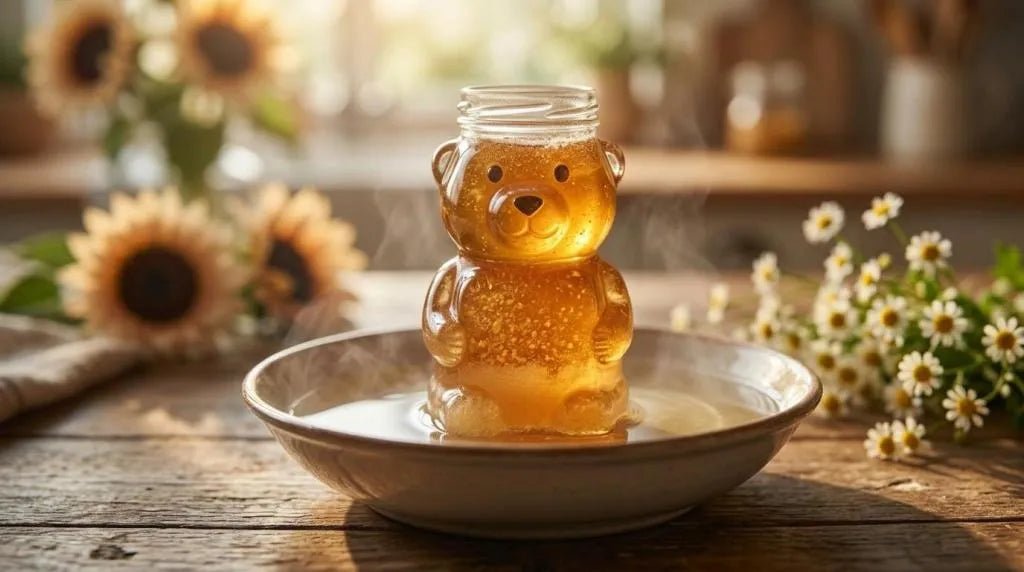
- Warm the jar slightly: Set it in a bowl of warm water for a few minutes so it pours smoothly.
- Mix before measuring: Crystallized or layered honey can throw off consistency if you scoop from the top.
- Add honey to the wet ingredients: It blends more evenly and reduces overmixing.
Temperature, timing, and pan choices

Honey bakes are often done earlier than you think, and also later than you think. The surface browns early, while the inside can still need time.
Lowering the oven temperature helps the middle catch up. So does choosing lighter pans and moving the rack to the center of the oven.
If you bake often with honey, it’s worth getting comfortable with doneness cues beyond color:
- For cakes and quick breads: a toothpick should come out clean or with a few moist crumbs, and the center should spring back.
- For cookies: pull them when edges are set and centers still look slightly underdone, then cool on the sheet.
- For enriched breads: a deep golden crust is fine, but stop it from going mahogany before the interior is finished.
Troubleshooting: quick fixes for common honey-swap issues
Honey is forgiving, but understanding honey benefits can help you make the most of its unique patterns. If a bake goes sideways, the fix is usually simple.
What happened
Likely cause
Next time
| Too dark on top or edges | Oven too hot, pan too dark, honey level high | Lower temp 15 to 25°F, use lighter pan, tent with foil |
| Gummy center in quick bread | Too much total liquid | Reduce milk/juice/water more, use 2/3 cup honey per cup sugar |
| Cookies spread too much | Dough too warm, honey too high, not enough structure | Chill dough, reduce honey, add 1 to 2 Tbsp flour if needed |
| Cake is dense | No creaming structure, batter overmixed | Use proper leavening, mix gently after flour, consider swapping only part of sugar |
| Flavor is too strong | Robust honey or intense infusion | Choose a lighter honey or blend mild and bold |
If you’re experimenting with infused honeys, start with a recipe you know well. Familiar recipes make it easier to taste what changed and adjust on the next batch.
Checkout Our Other Great Recipes


A simple way to start if you want low risk
Try swapping honey into recipes that already like moisture: banana bread, pumpkin muffins, chewy oatmeal cookies, granola bars, and snack cakes. Use the 2/3 to 3/4 rule, lower the oven temp a bit, and reduce the obvious liquid.
Then, once your hands know how honey behaves, move on to the delicate stuff like angel food cake and crisp sugar cookies, where sugar’s crystal structure does more heavy lifting.
If you keep a few honeys on hand, including a mild everyday wildflower and one infused option, you can treat sweetness like an ingredient instead of a default. That’s when baking with honey and another sweetener starts feeling less like substitution and more like style.
🐝 Honey Baking Challenge
How well do you know your honey conversions?
Conclusion
Swapping in honey works best when you treat it as its own ingredient, not a 1:1 stand-in for sugar, so yes, you can bake with honey instead of sugar, but consider the baking with honey conversion to adjust measurements properly. Use 2/3 to 3/4 as much honey, reduce other liquids, lower the oven temperature, and watch color without letting it trick you. From there, choose a honey that fits the recipe’s personality, keep doughs a bit cooler, and lean on lighter pans when browning runs ahead. With a few repeats, the adjustments become second nature—and honey turns from a substitution into a signature.

Baking with honey isn’t just a sugar swap—it’s a smarter way to create moister texture, richer flavor, and naturally golden baked goods using a wholesome sweetener straight from the hive. By choosing high-quality raw honey and making a few simple adjustments, you can transform everyday recipes into bakery-worthy treats with clean, natural sweetness. Ready to put these tips into action? Browse Our Signature Honey Infusions and discover the perfect honey to elevate your favorite baked goods, from soft muffins to perfectly caramelized cookies.
Frequently Asked Questions
Can I use honey in recipes that require a lot of sugar, like cakes and cookies?
Yes, you can use honey in recipes that typically require a lot of sugar, but adjustments are necessary. Start by replacing only part of the sugar with honey to maintain the structure and texture of the baked goods. For cakes and cookies, use 2/3 to 3/4 cup of honey for every cup of sugar, reduce other liquids, and lower the baking temperature to prevent over-browning. This way, you can enjoy the benefits of honey while still achieving delicious results.
How does the flavor of honey impact baked goods?
The flavor of honey can significantly influence the taste of your baked goods. Mild honeys, like clover or wildflower, provide a subtle sweetness without overpowering other flavors, making them ideal for delicate recipes. In contrast, darker or infused honeys can add rich, complex flavors that enhance certain dishes, such as spiced cakes or breads. When selecting honey, consider how its flavor profile will complement the other ingredients in your recipe for the best results.
What should I do if my baked goods are too moist when using honey?
If your baked goods turn out too moist when using honey, it’s likely due to excess liquid in the recipe. To remedy this, reduce the amount of other liquids by about 1/4 cup for every cup of honey used. Additionally, consider using the lower end of the honey measurement range (closer to 2/3 cup per cup of sugar) to maintain the right balance of moisture. This will help achieve the desired texture without compromising flavor.
Are there specific types of honey that work better for certain recipes?
Yes, different types of honey can enhance specific recipes. For instance, light honeys like clover are great for neutral-flavored baked goods, while darker honeys, such as buckwheat, add depth to richer recipes like brownies. Infused honeys can also provide unique flavor notes, making them perfect for specific dishes. Experimenting with various honey types can elevate your baking and create delightful flavor combinations that surprise your taste buds.
How can I prevent my cookies from spreading too much when using honey?
To prevent cookies from spreading excessively when using honey, chill the dough for 30 to 60 minutes before baking. This helps firm up the fat and maintain the cookie's shape. Additionally, use the lower range of honey (around 2/3 cup per cup of sugar) to reduce the syrupy consistency that causes spreading. If needed, you can also add 1 to 2 tablespoons of flour to the dough for extra structure, ensuring your cookies hold their shape during baking.
What are some common mistakes to avoid when baking with honey?
Common mistakes when baking with honey include not adjusting the liquid content, using too much honey, and not lowering the oven temperature. Honey retains moisture, so it’s crucial to reduce other liquids in the recipe. Additionally, using a 1:1 substitution for sugar can lead to overly sweet or gummy results. Always lower the baking temperature by 15 to 25°F to prevent premature browning. Being mindful of these factors will help you achieve better baking outcomes with honey.
Can I use honey in gluten-free baking?
Absolutely! Honey can be a great sweetener in gluten-free baking. It adds moisture and flavor, which can enhance the texture of gluten-free baked goods. However, be sure to adjust the liquid content in your recipes, as honey is a liquid sweetener. Start with the recommended conversion of 2/3 to 3/4 cup of honey for every cup of sugar, and reduce other liquids accordingly. This will help you achieve the right consistency and flavor in your gluten-free treats.

Author - Jim Douglas - Founder Huckle Bee Farms
For Jim Douglas, beekeeping is more than a craft—it’s a commitment to purity and the environment. After an honorable career in the U.S. Army and a tenure as a COO for the Boy Scouts of America, Jim sought a way to combine his leadership experience with his love for the outdoors.
In 2012, he founded Huckle Bee Farms with a simple mission: to take honey back to its raw, unadulterated roots. Jim’s expertise lies in the delicate balance of infusing raw honey with organic ingredients without compromising its natural medicinal properties. His "small-batch" philosophy ensures that every jar meets the highest standards of quality and transparency. Today, Jim continues to lead Huckle Bee Farms with the same integrity he practiced in uniform, ensuring that every drop of honey supports both the health of the consumer and the survival of the honeybee.
His mission is simple: to make life a little sweeter—naturally.
Key Takeaways for Baking with Honey
This list summarizes essential points to remember when substituting honey for sugar in baking, ensuring successful and delicious results.
- Use Less Honey – Start with 2/3 to 3/4 cup of honey for every 1 cup of granulated sugar to maintain the right sweetness level.
- Reduce Other Liquids – Cut about 1/4 cup of other liquids per cup of honey used to prevent overly moist baked goods.
- Lower Oven Temperature – Decrease the baking temperature by 15 to 25°F to avoid premature browning and ensure even cooking.
- Balance Acidity – Consider adding 1/4 to 1/2 teaspoon of baking soda per cup of honey to help with acidity adjustments, especially in recipes without baking soda.
- Choose the Right Honey – Select a honey variety that complements your recipe, such as light wildflower for neutral sweetness or darker honey for richer flavors.
- Measure Accurately – Use a lightly oiled measuring cup or a kitchen scale for precise honey measurements to avoid excess sweetness.
- Monitor Baking Time – Start checking for doneness earlier, as honey can cause baked goods to brown faster while the center may still need time.
- Adjust for Recipe Type – Tailor your approach based on the type of baked good, as cakes, cookies, and breads may require different adjustments when using honey.